Deciding Whether to Bike to Work in Wet Weather
Assess a wet-weather bike commute, prepare clothing and luggage, inspect the bike, and decide when another transport option makes more sense.
Updated October 30, 2026
Rain changes more than how comfortable a bicycle ride feels. It can affect visibility, surfaces, the condition of your equipment, and your options for getting home. Decide whether the trip is suitable before choosing a jacket. Equipment can help with ordinary weather, but it cannot make every route or forecast workable.
Look at the return journey too
Check the forecast, relevant alerts, and any local route notices for both travel windows. A mild morning shower does not tell you what the evening will be like. NOAA’s outdoor weather guidance is a useful reminder to plan around changing conditions and the available shelter.
Choose in advance what would make you switch modes: a severe-weather warning, a flooded section, insufficient visibility, or a mechanical problem. That decision is easier to make before a work deadline starts influencing your judgment.
Simplify the route
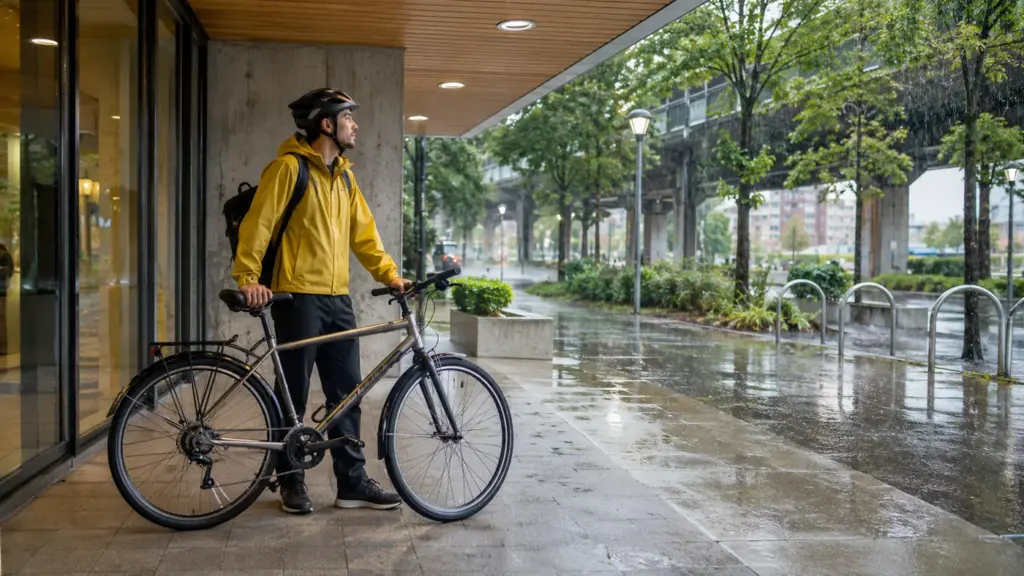
Review sections with poor drainage, steep descents, painted surfaces, metal covers, or complicated turns. Give yourself more time and avoid a route whose difficult sections exceed your experience in the conditions. Do not ride into floodwater or assume you can judge a hidden surface beneath it.
Thunderstorms deserve a separate decision. The National Weather Service lightning guidance emphasizes getting to suitable shelter. A tree or an exposed roadside stop is not an adequate plan for continuing a ride during lightning.
Protect what must arrive dry
Use a reliable waterproof liner or bag for work equipment, spare clothing, and essential documents. Close it carefully and keep it away from moving parts. Test your packing before relying on it with electronics inside.
Choose clothing that allows movement and preserves your view and hearing. Secure loose hems and straps. Think about where wet layers will go on arrival; leaving them draped across a shared passage solves one problem by creating another.
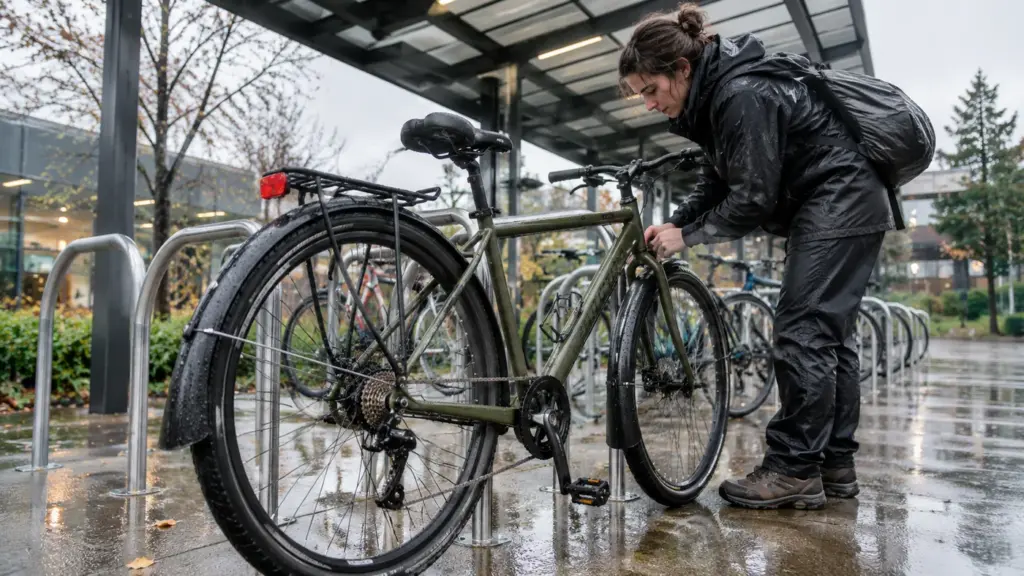
Inspect and reset afterward
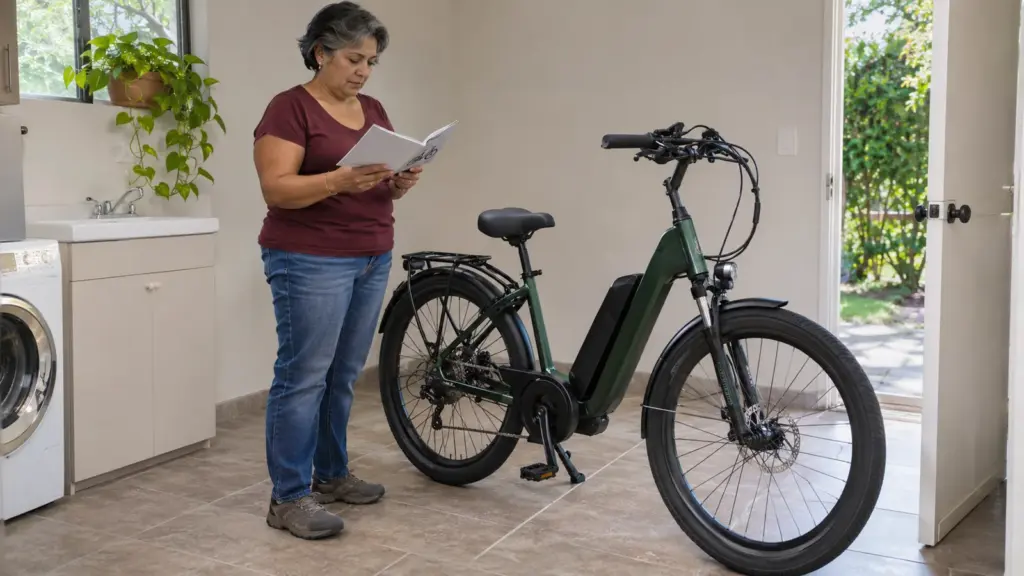
Check tires, brakes, lights, and mounts before leaving. If braking or handling feels different, stop in a suitable place and reassess. After the trip, follow the bicycle manufacturer’s care guidance, inspect for problems, and arrange attention where needed.
You do not need to turn an occasional wet ride into a commitment to ride in every condition. Record which parts of the trip worked and which did not. A repeatable commute includes permission to choose transit, a ride, or another practical option when the weather changes the journey.