How to Plan Your First Bike Commute
Build your first bike commute around a manageable route, a practice ride, secure parking, and a realistic plan for getting home.
Updated October 30, 2026
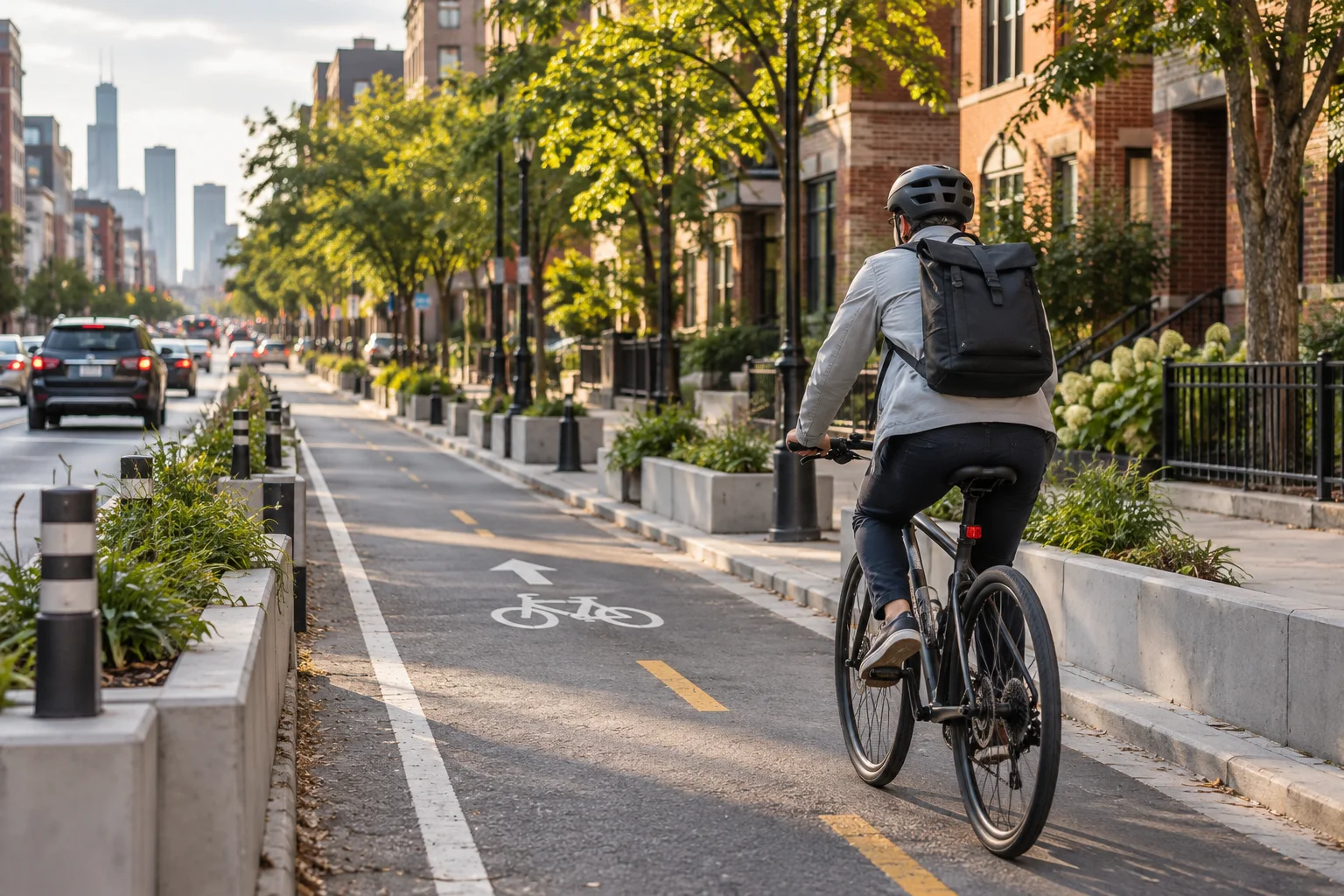
Your first bicycle commute does not have to become your everyday commute. Treat it as a small route-planning project: choose a workable day, test the journey, and decide what you need at the other end. A successful first attempt gives you useful information, even if you change the route afterward.
Start with a route you can understand
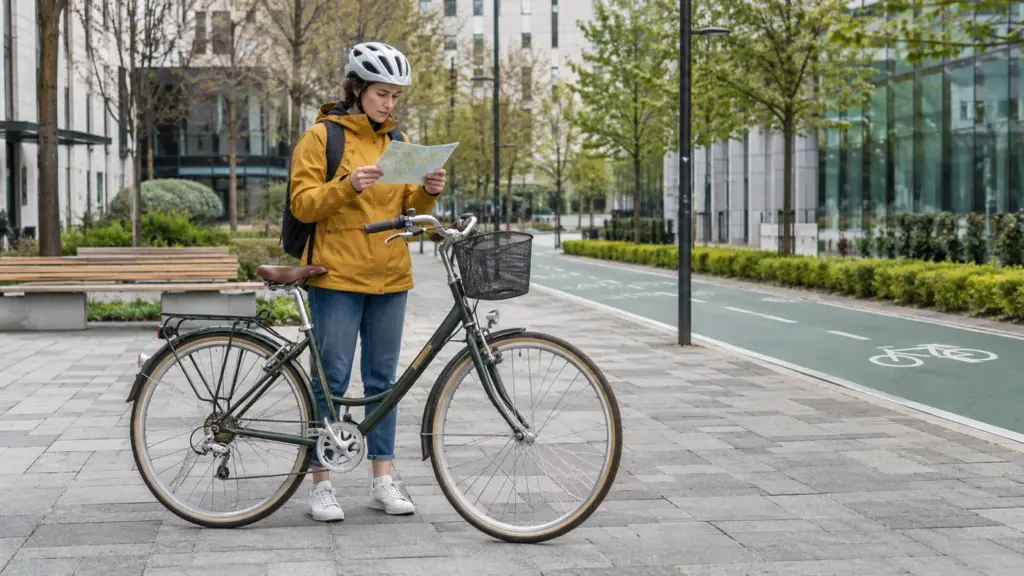
Compare a bicycle route with a street map and the city’s cycling map. Notice where protected facilities end, where traffic turns across your path, and whether a bridge or hill changes the effort involved. A mapping app’s shortest suggestion may not match your confidence or the equipment you carry.
The League of American Bicyclists commuting guide is a useful starting point for planning. Write down the two or three places where the route needs extra attention. If one junction makes the whole trip unworkable, look for an alternative before committing to it.
Try it without a work deadline
Ride the route when you have time to stop somewhere suitable, check directions, or turn back. Observe the return direction separately: one-way streets, hills, and changing light can make it a different journey. A weekend rehearsal helps with navigation, but it will not reproduce weekday traffic exactly.
Record the time from your front door to the workplace entrance, including locking the bike and changing clothes. Give the first workday attempt extra time. The point is to arrive with room to settle in, not to prove that you can match an optimistic estimate.
Solve the arrival before departure
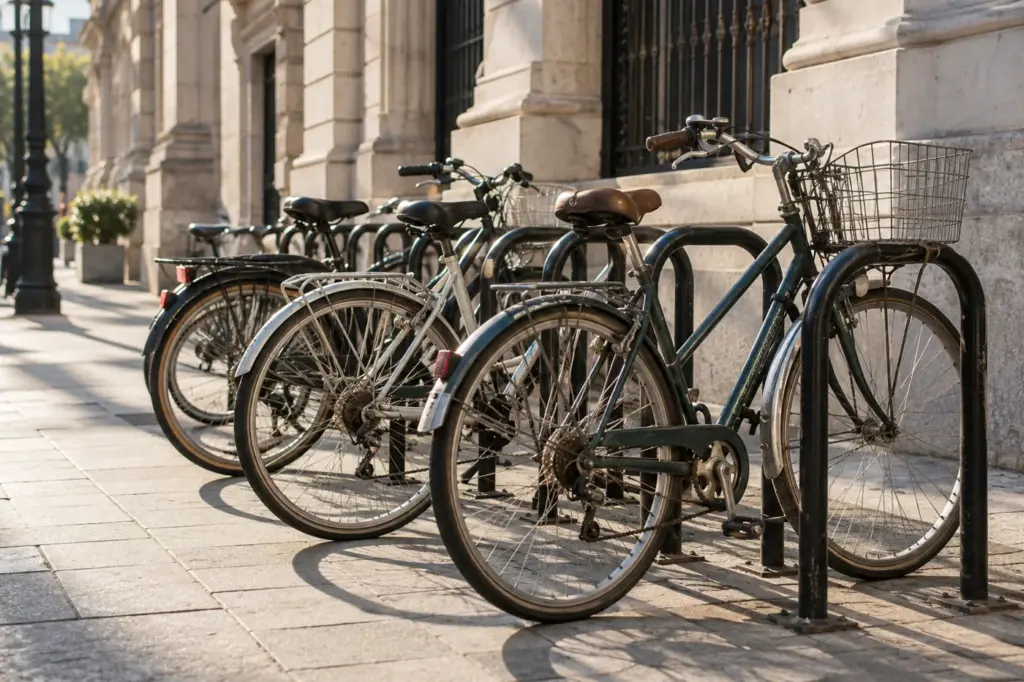
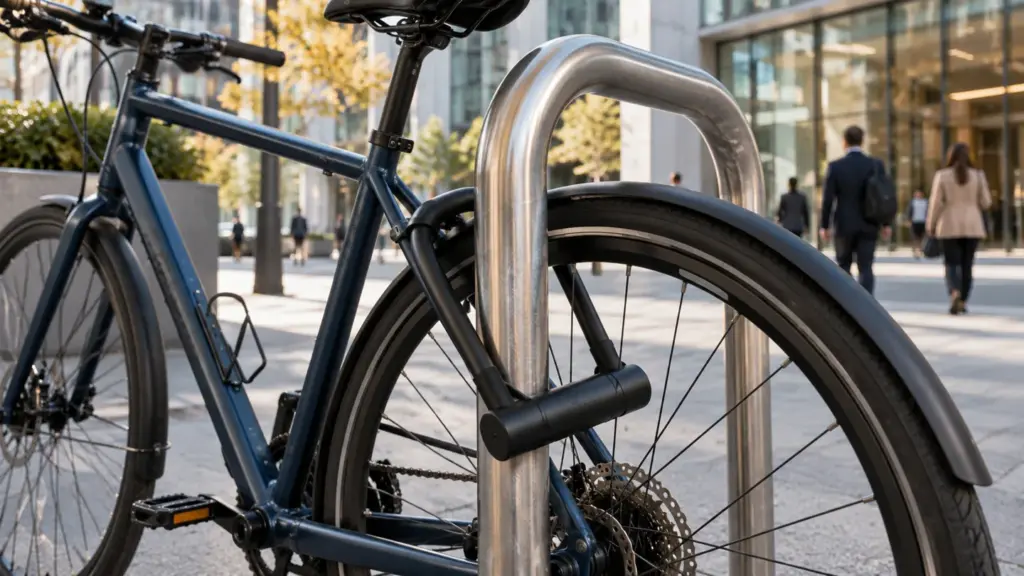
Ask where bicycles may be parked and whether you need a key, access card, or advance permission. Check that the available rack supports a secure lock through the frame. Identify a place for wet clothing and confirm any changing facilities rather than assuming they exist.
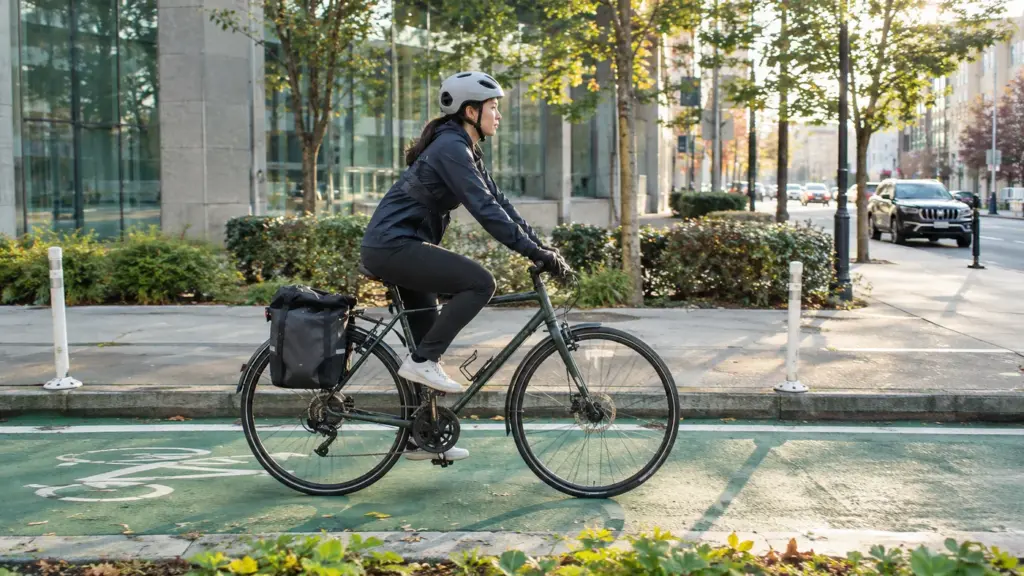
Carry only what you need that day. Secure luggage so it cannot swing into a wheel or interfere with steering. If possible, leave bulky work shoes or a spare layer at work to simplify later rides.
Give yourself a return option
Check the forecast for the trip home and keep your lights ready even when you leave in daylight. If you might combine cycling with transit, verify the operator’s bicycle rules and the practical route through the station. A backup is only useful if it accepts your bicycle at the time you need it.
After the first trip, note one improvement: a better turn, a less awkward bag, or a more convenient rack. Repeat the parts that worked. A bike commute becomes sustainable through useful adjustments, not through forcing every day to be identical.