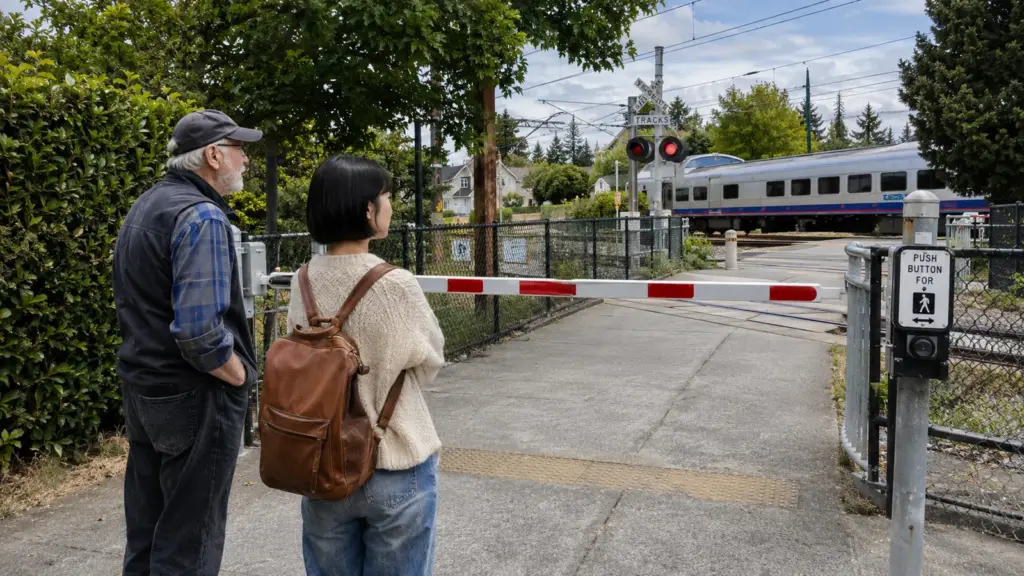
How to Plan Around Sidewalk Obstacles and Detours
Prepare for blocked sidewalks and construction with a practical route check, useful reporting details, and accessible alternatives.
Updated October 30, 2026

A delivery vehicle, construction fence, or damaged surface can interrupt a route that worked yesterday. The inconvenience is not the same for every pedestrian. A short obstruction may create a much larger problem for someone using a wheelchair, pushing a stroller, or carrying equipment.
A good response starts before you reach the narrowest point. Look ahead, identify the intended pedestrian route, and decide whether it remains usable for you. Avoid assuming that you can simply step into traffic to get around an obstacle.
Look for the planned alternative
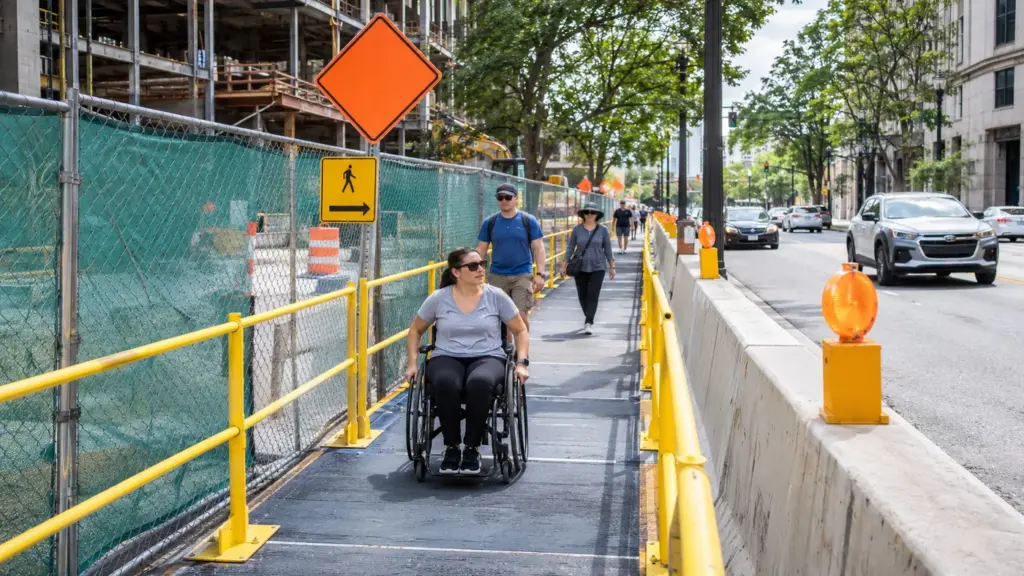
Construction areas may provide a signed pedestrian detour or a protected temporary walkway. Read the signs early enough to choose the appropriate crossing before reaching the closure. A barrier at the curb is a reason to reassess, not an invitation to squeeze through an active work area.
If the detour is unclear, return to a suitable decision point rather than continuing into an uncertain section. Ask an identifiable site representative for directions when practical, but do not enter the work zone to find one. Check whether the alternative reconnects to your destination before committing to it.
Think about the complete accessible route
A usable segment needs useful connections at both ends. Look at curb ramps, surfaces, widths, and the final entrance. The U.S. Access Board’s public-right-of-way guidance treats pedestrian access as a continuous route with clear space and connections. It is a design reference, not a guarantee that every existing sidewalk you encounter already meets every provision.
For your own planning, record the specific obstacle: a missing ramp, an abrupt surface change, a closed gate, or a passage too narrow for your needs. Specific observations are more useful than a general note that a route is difficult.
Check the transfer point too
If the walk leads to a bus stop or station, the problem may continue at the entrance. A detour can place you on the opposite side of a wide road or beside a stair-only access point. Review the approach to the actual boarding location, not just the station name on a map.
An operator’s accessibility information can help identify appropriate entrances and boarding arrangements. For example, LA Metro’s accessibility guide describes features and assistance on its system. Use the relevant operator’s own guidance for your trip and check current notices before relying on a particular entrance.
Report the location precisely
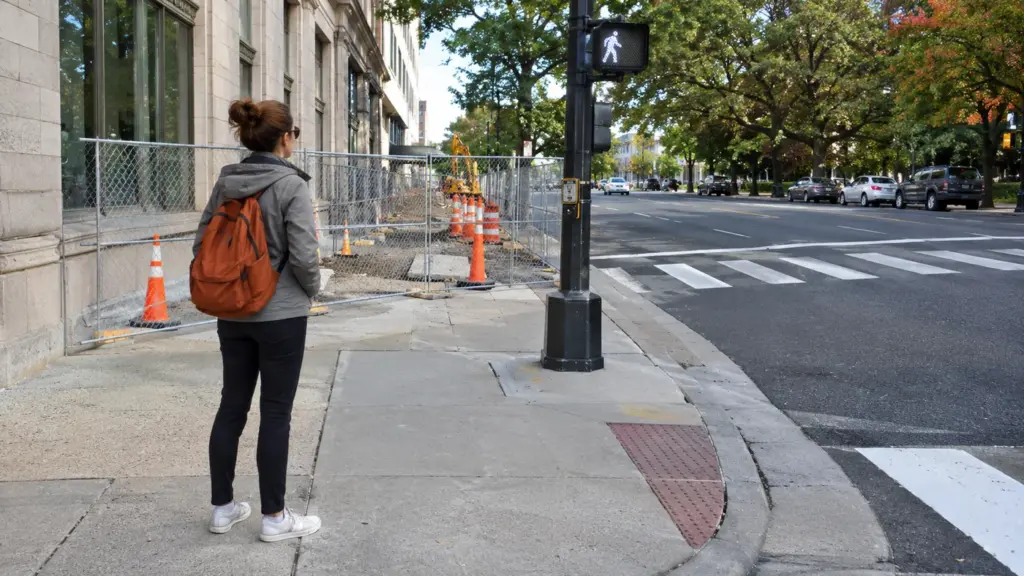
When you can do so safely, note the street, nearest cross street, side of the road, and the nature of the obstruction. A photo can help describe a recurring problem, but take it from a safe position without stepping into the affected area or photographing people unnecessarily.
Use the responsible city, property owner, or transit agency’s official reporting channel. A request number can help you follow up. Reporting does not immediately make the route usable, so keep a practical alternative while the issue remains unresolved.
Maintain a small detour plan
Identify one nearby crossing or parallel route that you can use if the usual sidewalk is blocked. Consider how much extra time it adds and whether it introduces another access problem. If no workable pedestrian route is available, reassess the travel mode or destination access rather than forcing the original journey.
- Look ahead for closures before reaching the barrier.
- Confirm that a detour works from end to end.
- Record and report the specific access problem.
- Keep an alternative until the route is actually usable again.
A route plan should account for real conditions, including temporary changes that a map has not yet captured.