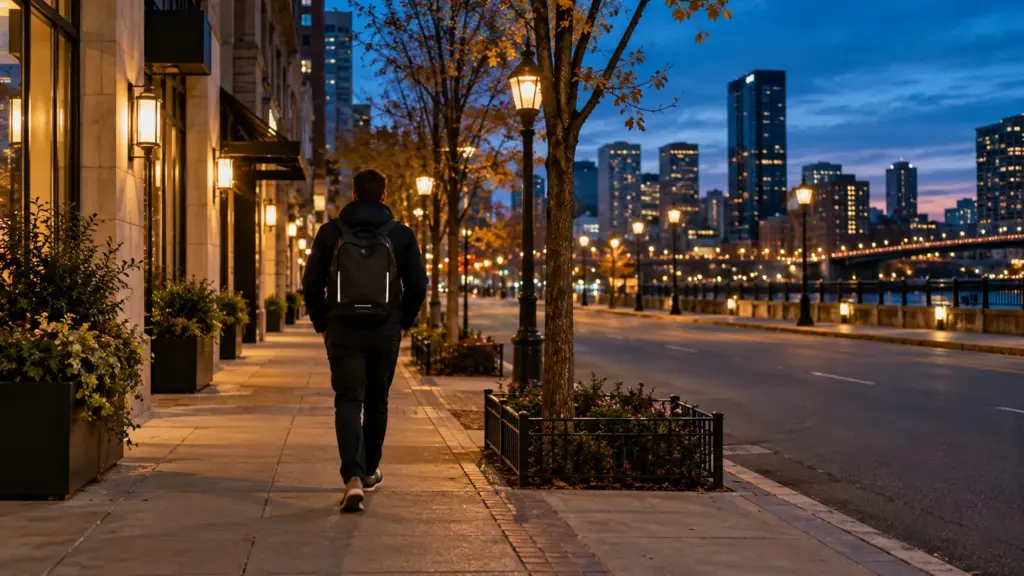
How to Prepare for a Walking Commute in the Rain
Plan footwear, visibility, protected belongings, crossings, and weather alternatives for a more manageable rainy walking commute.
Updated October 30, 2026

A rainy walk can be manageable when the route and conditions are suitable, but an umbrella alone is not a complete plan. You also need to think about the surface underfoot, what you are carrying, how well you can see, and whether the weather calls for postponing the walk altogether.
Begin with the conditions expected during both journeys. Morning rain may clear before the return trip, or a mild departure may be followed by a stronger storm. Check a current forecast and relevant warnings rather than judging the whole day from the view outside the door.
Choose the route for wet conditions
Review places where water collects, where the sidewalk becomes narrow, and where you need to cross vehicle entrances. A route with a little more shelter may be useful if it still provides clear, usable pedestrian space. Avoid shortcuts through unfamiliar areas simply to stay dry.
Plan around surfaces that are difficult for your footwear or mobility needs. Give yourself time to slow down and reassess a section. If water hides the surface or makes the route uncertain, choose an alternative instead of assuming it is shallow or easy to cross.
Keep clothing and equipment practical
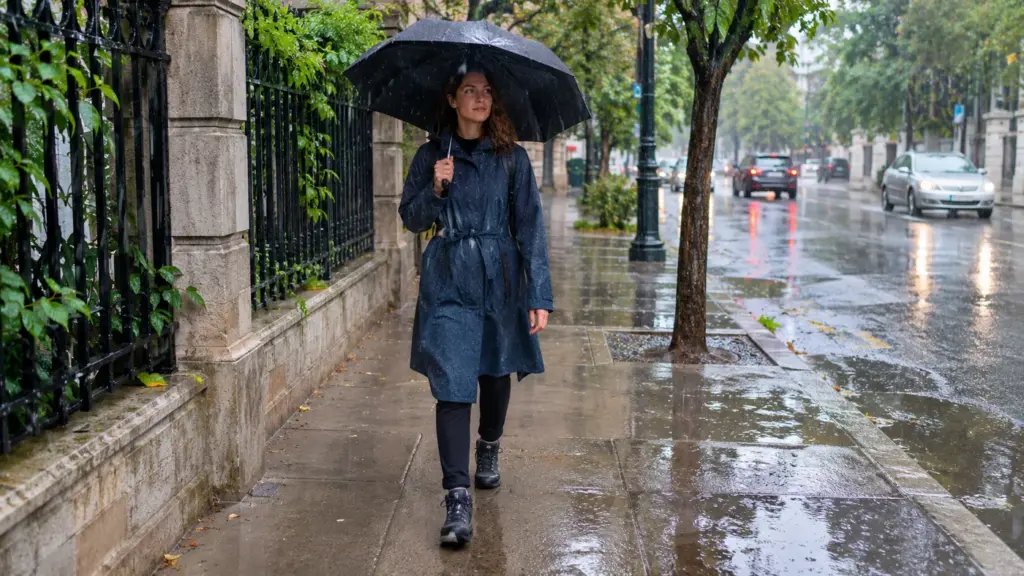
Choose footwear that is appropriate for the conditions and comfortable for your walking distance. Check that a coat or hood does not substantially block your view or hearing. If you carry an umbrella, make sure you can see the route and manage it without obstructing other pedestrians.
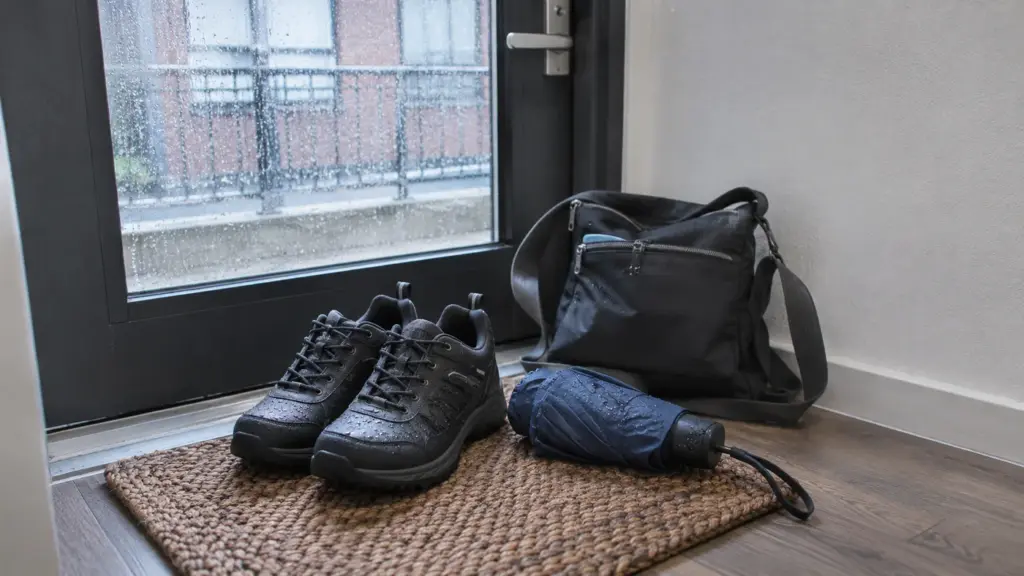
Pack work items in a suitable protective layer inside your bag. Keep the items you need at the entrance accessible, so you do not have to unpack everything outside. A small dry cloth and a change of socks may be useful if your workplace has somewhere to store them.
Build a different crossing routine
Pause where you can see the crossing and surrounding traffic. Adjust the umbrella or hood before stepping forward. Wet conditions can make both pedestrians and drivers less comfortable, so avoid treating everyone else’s movement as a reliable signal to proceed.
Allow time for the crossing you intended to use. The urge to reach shelter can make an improvised shortcut tempting, especially near a station or office entrance. Keep the journey deliberate and follow the applicable pedestrian signals and rules.
Recognize when rain becomes a different hazard
The NOAA outdoor-weather guide recommends consulting current forecasts, advisories, and warnings when planning outdoor activities. A light shower and a thunderstorm require different decisions. Build the option to delay, shelter appropriately, or change travel mode into the plan.
The National Weather Service’s lightning guidance calls for a safety plan and moving to a safe place before conditions become threatening. An umbrella or ordinary open shelter should not be treated as adequate protection from lightning. If storms are expected, arrange the alternative before leaving rather than waiting until you are already between destinations.
Make arrival part of the plan
Know where you can put wet items without creating an obstruction or slippery area for others. Allow a few minutes to dry off and organize belongings before beginning work. If the route repeatedly leaves important items soaked, improve the packing system or choose a different option on wet days.
A useful rainy-walk plan is modest and repeatable: check the weather, choose a usable route, protect essentials, keep your view clear, and know when to change the journey. Comfort helps, but the deciding factor is whether the conditions and route are suitable for you.