Planning the Walk Home After Dark
Review lighting, crossings, open entrances, belongings, and backup travel options before making your regular walk home after dark.
Updated October 30, 2026
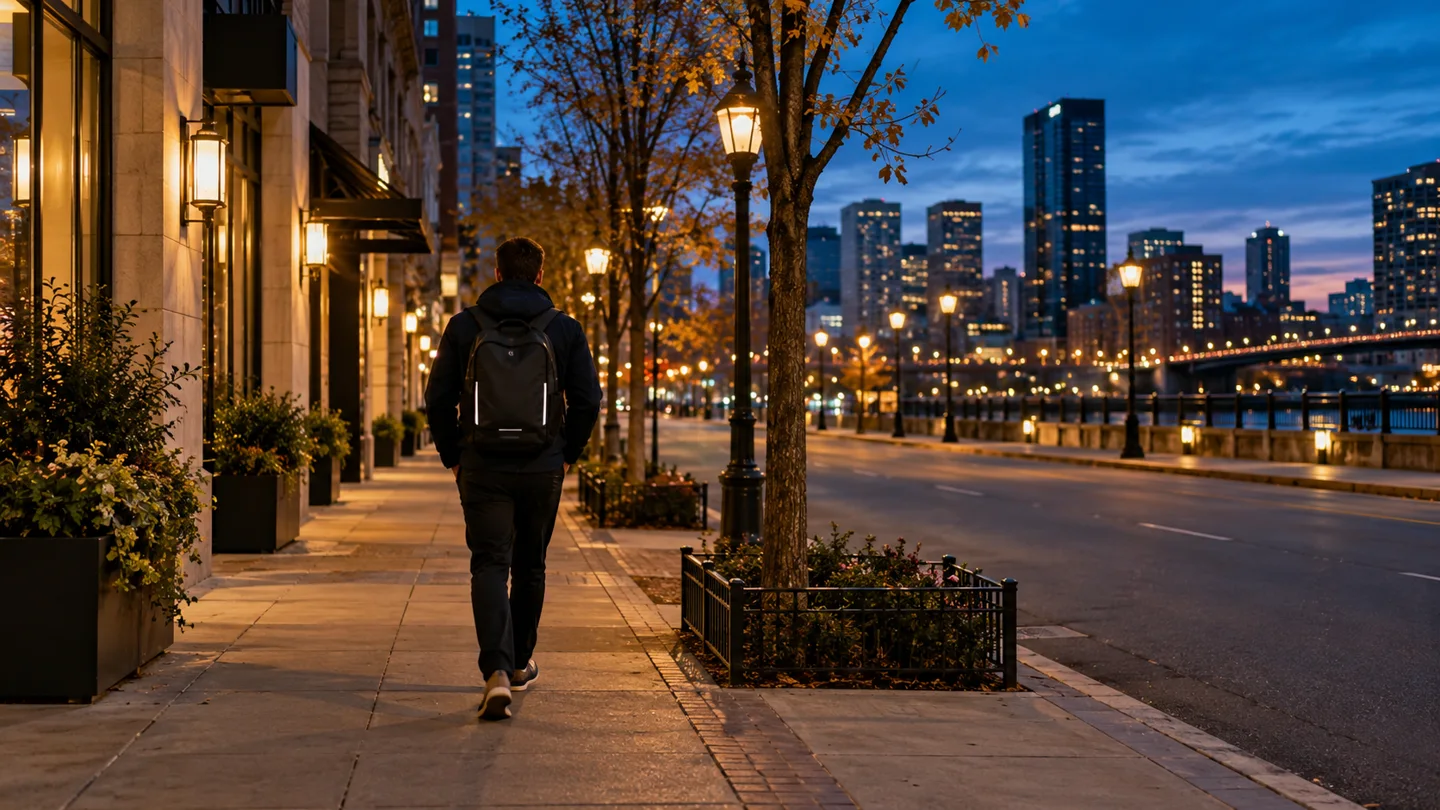
The walk home deserves its own plan when daylight fades before you leave. A route that is pleasant at lunch may have dark stretches, closed gates, or a less useful station exit in the evening. Reviewing those details in advance is more practical than trying to solve them while standing outside with a low phone battery.
Start with your actual departure time. Consider the walk from the workplace door to the transit stop or parking location, as well as the final stretch home. Even a mostly seated commute can include two walking segments that change after dark.
Inspect the route before you need it
Look for continuous lighting and a usable sidewalk rather than assuming a main road is automatically the best choice. Notice where you will cross, where driveways interrupt the sidewalk, and whether a path or building passage closes in the evening. Check the return direction too.
If you are uncertain about a section, try an alternative at a time when you can assess it without rushing. You may prefer a slightly longer route with clearer crossings or more straightforward access. Choose based on what you observe and your own needs, not just the distance shown by an app.
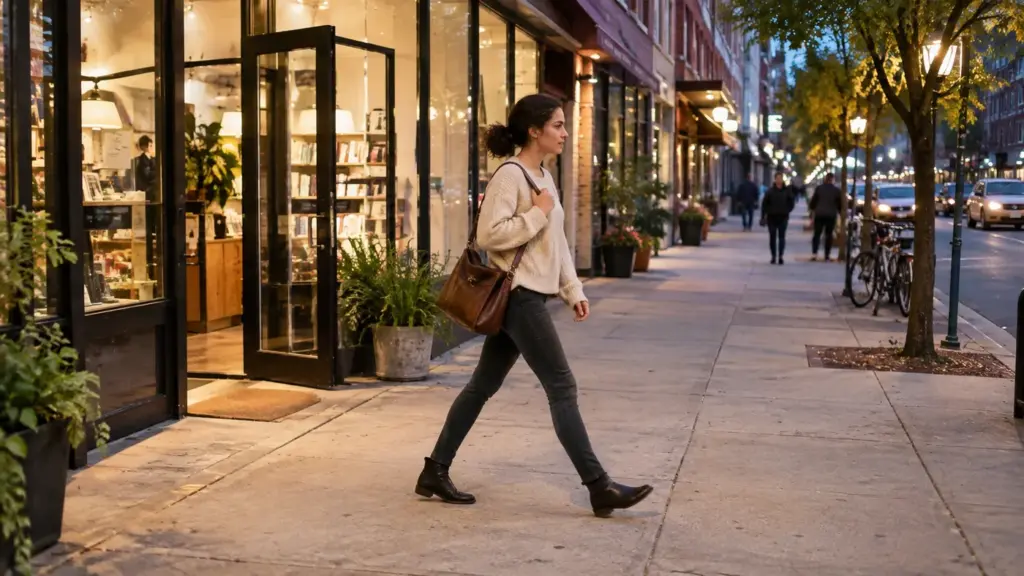
Make visibility part of preparation
Darkness changes what drivers can see. The NCDOT night-driving guidance discusses reduced visibility and glare after dark, which helps explain why pedestrian route choices and attention remain important. Wear or carry visibility items suitable for your conditions, while remembering that no item guarantees a driver has noticed you.
Keep your view and movement clear. Adjust a hood, bag, or umbrella before reaching a crossing. Stop somewhere suitable to read detailed directions rather than walking while focused on the screen. Leave enough time to use the crossing you planned instead of taking an improvised shortcut.
Plan around entrances that may close
A station, office complex, or garage can have several entrances with different hours. Confirm the entrance you will use when returning late and how to reach it from the street. Save any instructions while you still have a reliable connection.
If your trip ends at a parked vehicle, consider the pedestrian route when choosing where to park. NHTSA’s vehicle-security advice recommends well-lit, busy parking areas and securing the vehicle. Treat lighting and access as practical selection factors, while avoiding promises that any location is risk-free.
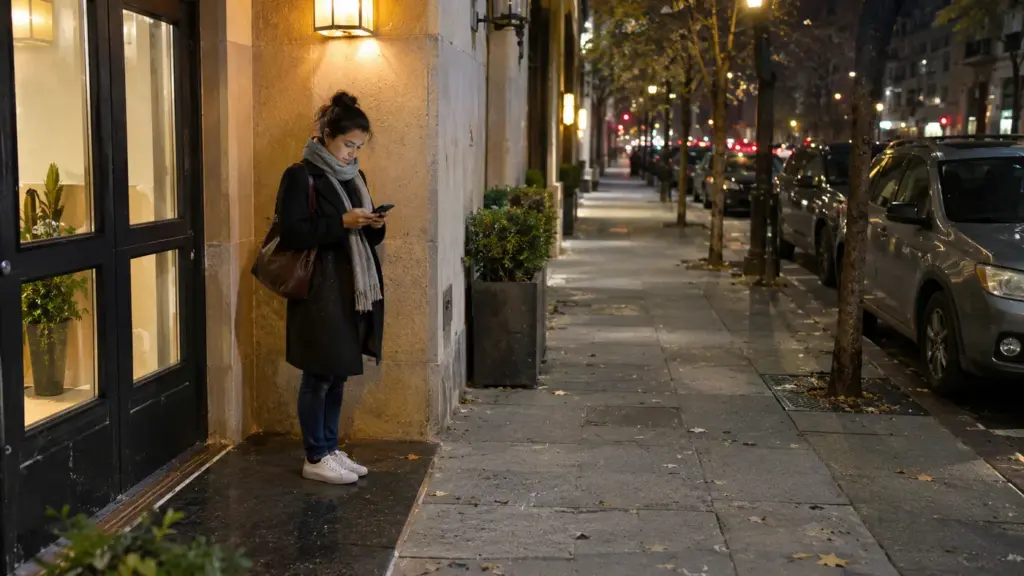
Keep essentials accessible without exposing everything
Know where your keys, fare method, and phone are before you leave. Organize belongings so you do not have to empty a bag at a doorway or fare gate. Keep the phone charged enough for the journey and save essential directions where you can retrieve them.
If sharing an arrival plan with someone is useful to you, agree on it before departure. Share only the information needed for that purpose. A simple expected-arrival message can be more manageable than a complicated routine that you will not maintain.
Have an alternative for changed conditions
Check what you could do if an exit is closed, the weather worsens, or you do not want to continue along a particular section. Verify that an alternative bus, train, or ride option operates at that hour. A daytime timetable does not establish that an evening connection will be available.
Review the plan when your work hours change. The best preparation is specific: a known route, a usable entrance, organized essentials, and an alternative you can actually use when the original plan no longer works.