What to Notice Before Crossing a Busy City Intersection
Learn what to notice at city intersections, from turning vehicles and sightlines to pedestrian signals and the far-side sidewalk.
Updated October 30, 2026
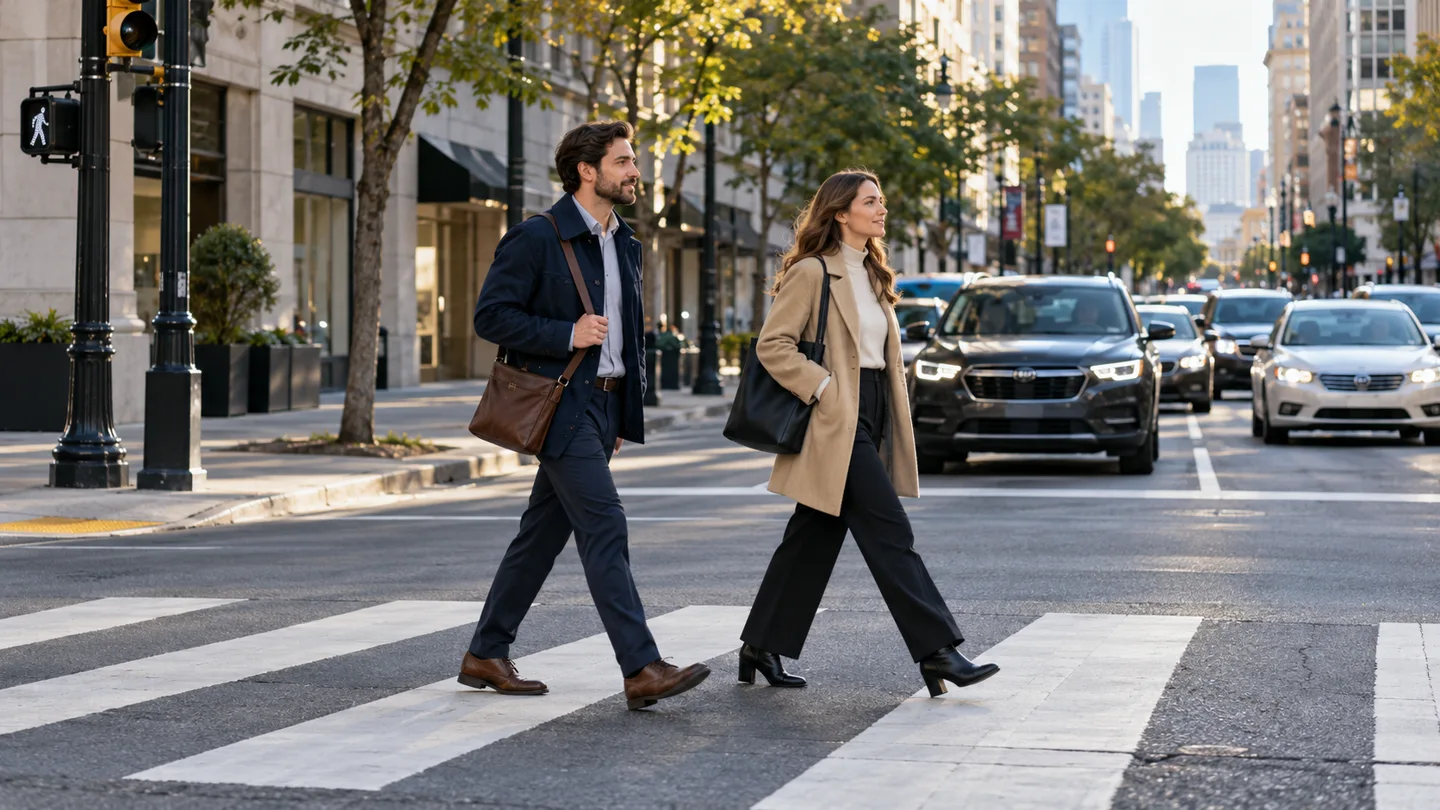
At a busy intersection, several movements can happen at once. Vehicles may turn, people may arrive from different directions, and a signal may change while you are still deciding where to stand. A short pause before crossing helps you understand the intersection instead of following the crowd automatically.
This guide is about observation and route planning. Follow the signals and rules that apply where you are walking. If the intersection feels unsuitable for your needs, consider another crossing rather than treating the nearest route as an obligation.
Identify the crossing you intend to use
Before reaching the curb, look at where the crossing leads. Confirm that the far side has a usable sidewalk or ramp and that the route continues toward your destination. A diagonal line on a map does not necessarily represent a crossing that is permitted or available on the street.
Stand where you can see the signal and surrounding traffic without blocking the path for others. If the crossing has an accessible pushbutton or other pedestrian equipment, use it as intended and allow time for the appropriate indication. Avoid beginning the crossing simply because people beside you have started moving.
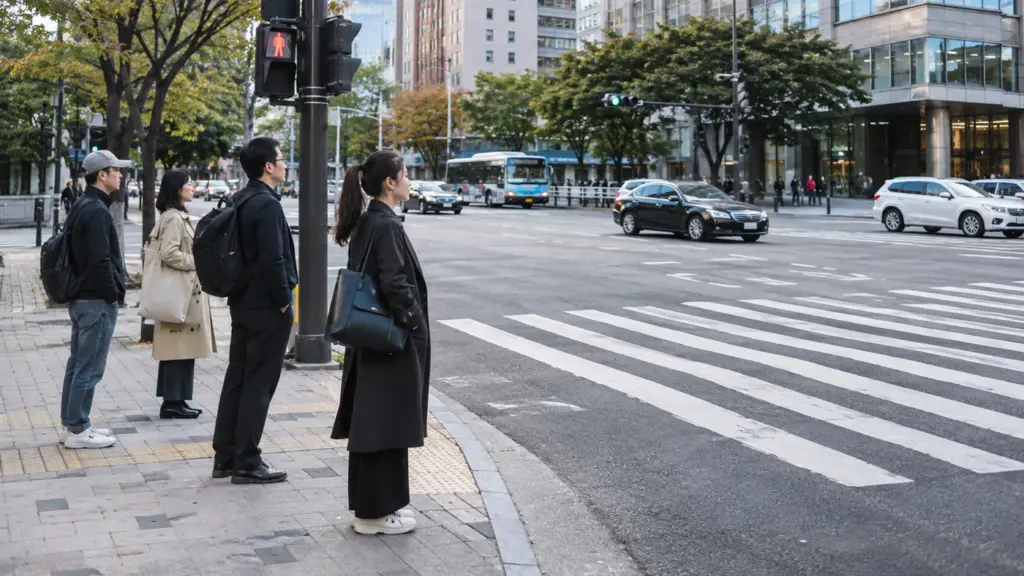
Look for turning movements
A vehicle traveling beside you may turn across the crossing. Another may approach from the opposite direction and turn into it. Notice those possibilities before you step off the curb and continue paying attention while crossing. NHTSA pedestrian safety emphasizes checking traffic and being alert to vehicles entering or leaving driveways and intersections.
An apparent glance from a driver is not a guarantee that the vehicle will stop. Make your decision from the full situation, including movement, signals, and available space. If your view is obstructed, do not fill in the missing information with an assumption.
Understand why clear corners matter
Parked vehicles and other objects close to a crossing can hide people from approaching traffic. Clearing space near a crossing is often called daylighting. SFMTA’s daylighting guidance explains how that space improves sightlines and describes California’s approach-side parking restrictions, including different treatment for curb extensions.
For a pedestrian, the practical lesson is to notice visibility at the corner. A painted crossing does not remove the need to see and be seen. When comparing regular routes, include sightlines among the reasons one intersection may work better for you than another.
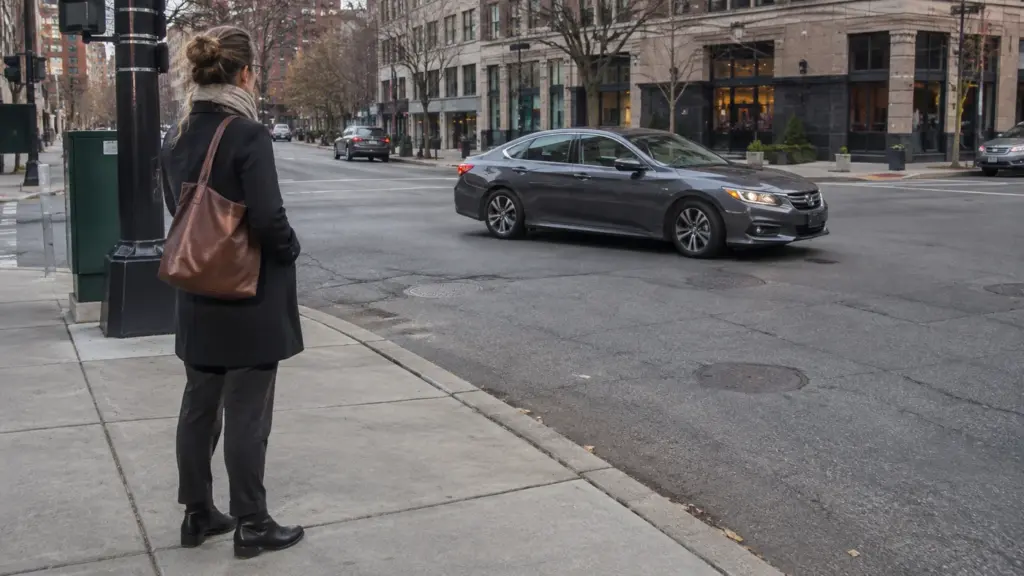
Account for the way you move
Consider the crossing’s length, the surface, and whether you need extra time or space. If you use a mobility aid, travel with children, or carry something bulky, choose a route that accommodates those needs. Rehearse an unfamiliar journey when you have time to assess it calmly.
If you cannot complete a particular route comfortably, look for another signalized crossing or an accessible alternative. Do not assume that repeated use will make an unsuitable crossing practical. Report recurring access or signal problems through the responsible local agency’s official channel.
Review the intersection after the trip
Ask which part required the most attention. Perhaps a turning movement was hard to see, the far-side ramp was blocked, or the crossing placed you on the wrong side of the destination. Those details can guide a small route change.
- Locate the intended crossing and its far-side landing.
- Follow the pedestrian indication and local rules.
- Notice turning traffic and objects blocking your view.
- Choose an alternative when the crossing does not meet your needs.
The goal is a crossing routine that stays deliberate, even when the rest of the commute becomes familiar.