How to Choose a Walking Route Beyond the Shortest Option
Compare sidewalks, crossings, lighting, access, and arrival points to choose a walking route that works for your everyday commute.
Updated October 30, 2026

The shortest walking route is a useful suggestion, not a complete description of the journey. It may include a difficult crossing, a narrow sidewalk, or an entrance that is inconvenient for your destination. A better comparison looks at the whole route and the conditions at the time you expect to use it.
Start with two reasonable options. You do not need an exhaustive map of every street. Compare one direct route with one alternative that changes the part you are least comfortable using. Then assess them on an ordinary day without an urgent arrival deadline.
Divide the route into useful pieces
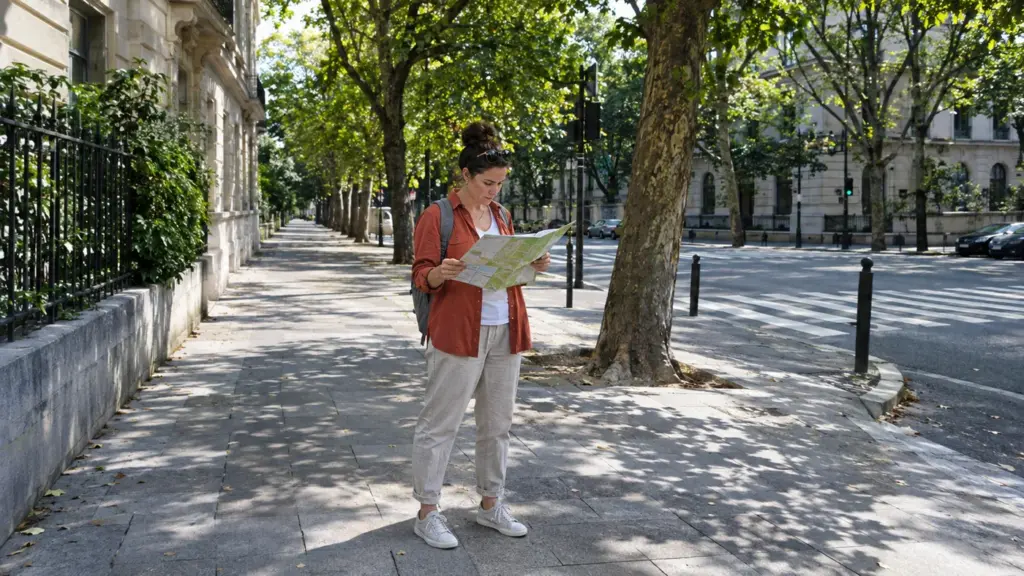
Look at the walk from your starting point to the first crossing, the main stretch, and the final approach. A route that works well for most of its length can still be awkward at either end. Include the correct building entrance, station access point, or workplace gate.
Write down the sections you need to inspect in person. Mapping tools can help you locate them, but a map will not necessarily show a new construction barrier or a changed entrance. If you use a wheelchair, mobility aid, or stroller, the continuity of the route matters as much as total distance.
Compare crossings before counting minutes
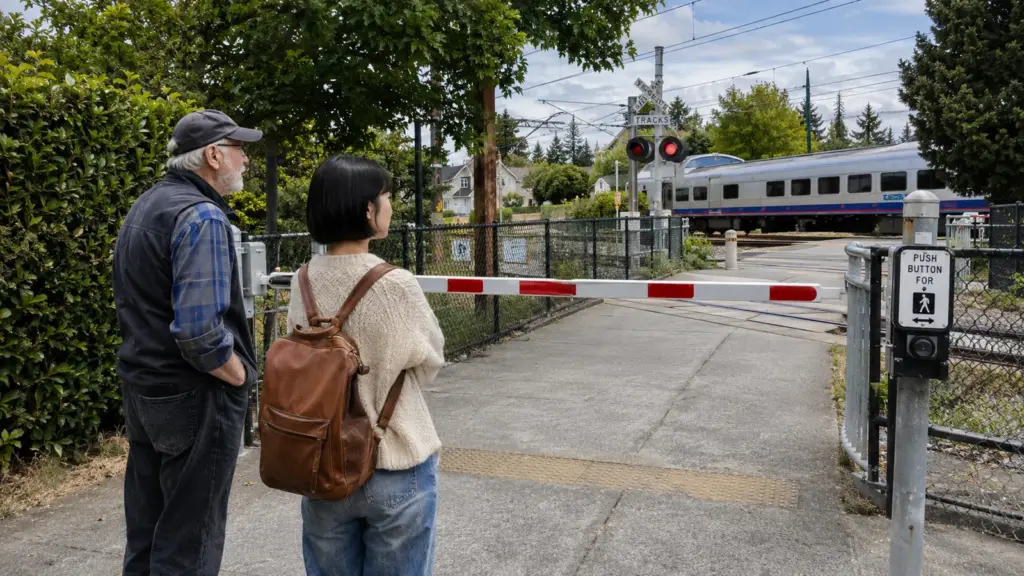
Note where each route requires you to cross. Look at available signals, marked crossings, visibility, and turning traffic. NHTSA’s pedestrian-safety guidance recommends using sidewalks when available and crossing at intersections or crosswalks. Follow local signals and assess the actual conditions rather than assuming a map’s route makes a crossing suitable.
A route with a slightly longer walk may be easier to use if its crossings are clearer. Test that idea instead of treating it as automatic. More distance can also mean more exposure to weather or an inconvenient connection, so weigh the whole trip.
Check whether the sidewalk stays usable
Look for broken surfaces, temporary barriers, narrow points, and driveways. Consider whether there is room to pass other people without stepping into traffic. The U.S. Access Board’s pedestrian-access guidance addresses continuous routes, clear space, and connections; those are also useful features to observe when planning your own journey.
Do not assume that one usable curb ramp guarantees an accessible route to the destination. Check both ends of crossings and the final entrance. If a section is blocked, look for an identified pedestrian detour and reconsider the route before entering the affected area.

Evaluate the time you actually travel
A lunchtime inspection may miss the conditions you face early in the morning or after work. Notice lighting, open entrances, crowding, and where vehicles enter or leave properties. If possible, walk the candidate route at the relevant time without rushing.
Think about the return journey separately. You may leave through a different door, carry more items, or travel after daylight has faded. A shaded morning route may not be the most comfortable option in the evening.
Keep a small route record
After trying each option, record the actual door-to-door time and one thing that worked or did not work. Avoid turning the comparison into a competition for the fastest possible walk. Use a comfortable pace and the crossings you would normally choose.
- Confirm the real entrance at both ends.
- Identify crossings and any difficult sidewalk sections.
- Check the route at the time you expect to use it.
- Save one alternative for closures or changed conditions.
Revisit your choice when construction, your schedule, or daylight changes. A useful walking route is one you understand well enough to adapt.