How to Prepare for a Commute After Dark
Prepare your car, route, and arrival plan for a commute after dark with practical checks for visibility, glare, fatigue, and parking.
Updated October 30, 2026
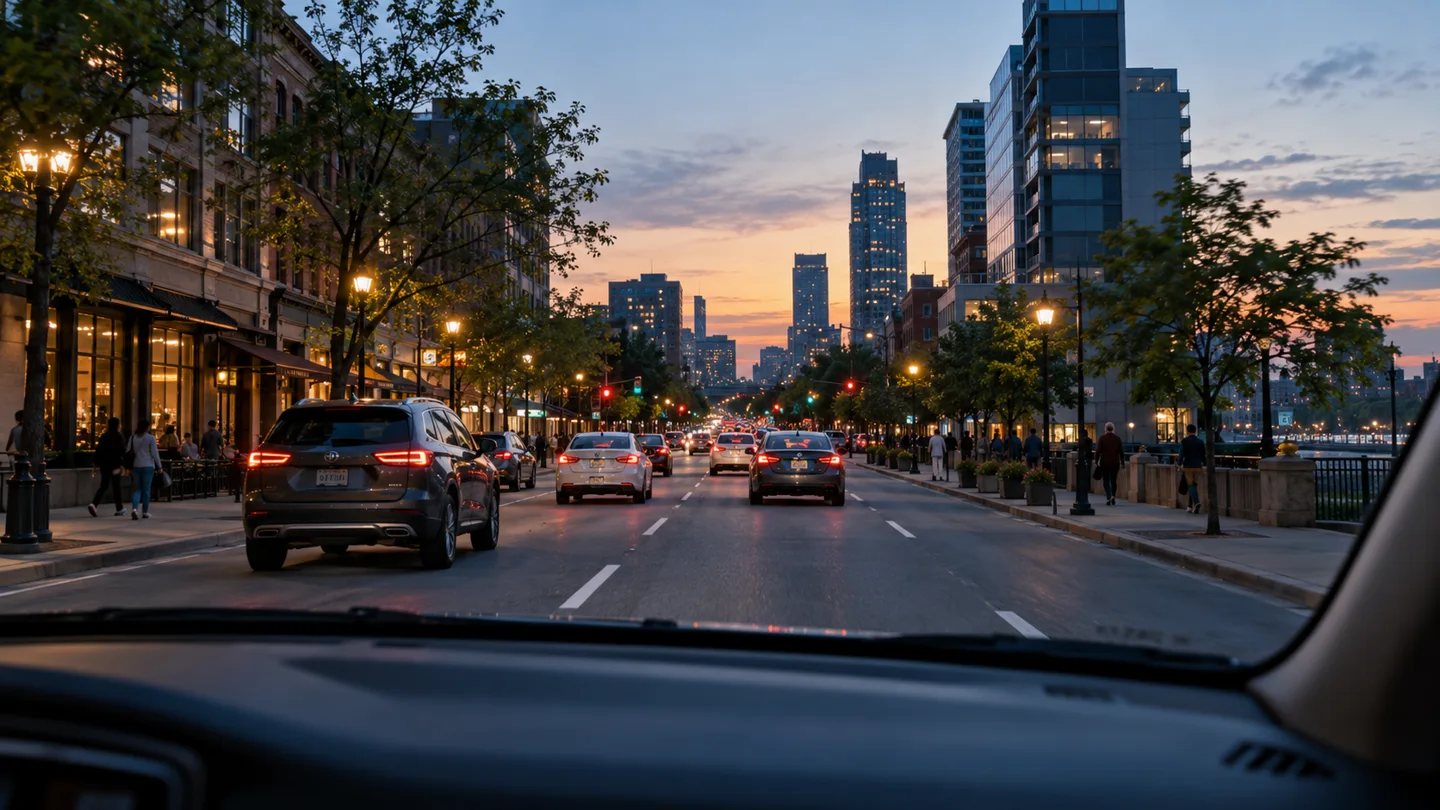
A route you know in daylight can feel different after dark. Street names may be harder to read, a familiar entrance can disappear into shadow, and the walk from parking may need a different plan. Preparing for the evening trip means looking beyond headlights to the entire journey.
Start by reviewing the conditions you actually face. A well-lit downtown drive, an unlit suburban road, and a shift ending late at night present different decisions. Use the following checks to identify what needs attention before you leave.
Make the view through the vehicle clearer
Clean the windshield inside and out and check that windows and mirrors give you a clear view. Arrange the cabin so reflections from screens and interior lights do not compete with the road. Learn the relevant brightness and mirror settings while parked.
The North Carolina Department of Transportation’s night-driving guidance recommends using the night setting on a rearview mirror when available and being rested before driving. Follow the vehicle manual for lighting controls. If a light is not working or seems misaligned, arrange an inspection rather than trying to compensate with a different driving habit.
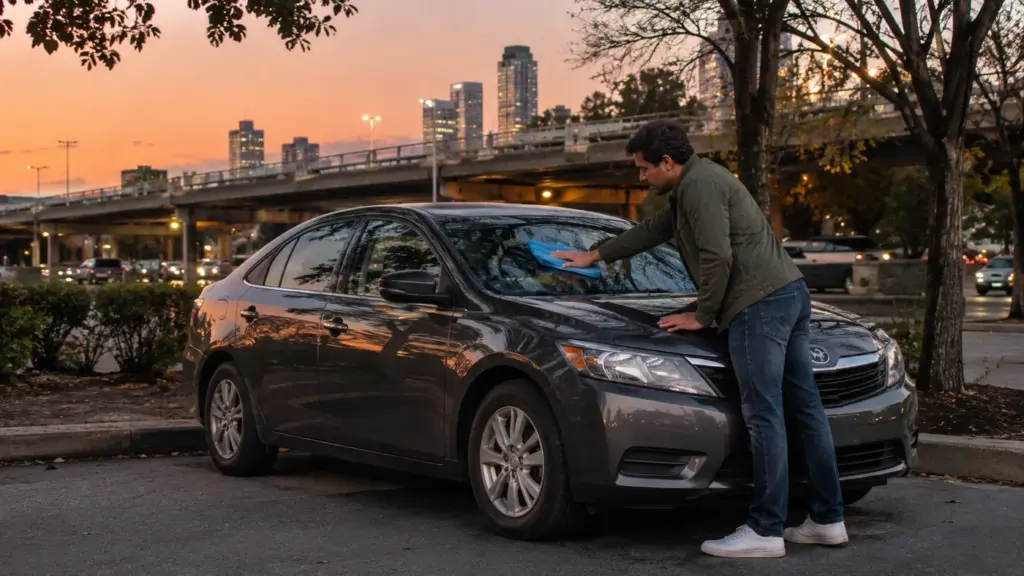
Review unfamiliar decisions before departure
Check the correct entrance and the last few turns before you start. A business that was easy to identify during the day may have a dark frontage at closing time. Save the garage entrance or a suitable stopping point instead of relying on a general address pin.
If you are trying a different route, examine it before departure and avoid making the first attempt when you are already rushed. Know a place where you could stop legally if you need to reconsider directions. Missing a turn is a reason to continue predictably, not to make an abrupt correction.
Plan for people who are harder to notice
Approach areas with crossings, driveways, transit stops, and curbside activity with attention to the actual conditions. Do not assume the road is empty because the surroundings appear quiet. Keep enough room to respond and follow applicable speed limits and signals.
Allow navigation guidance to remain secondary to what is happening outside the vehicle. If a screen or voice prompt becomes confusing, keep driving safely until you can stop in a suitable place. You can correct a route later; you cannot undo a hurried maneuver once it creates a conflict.
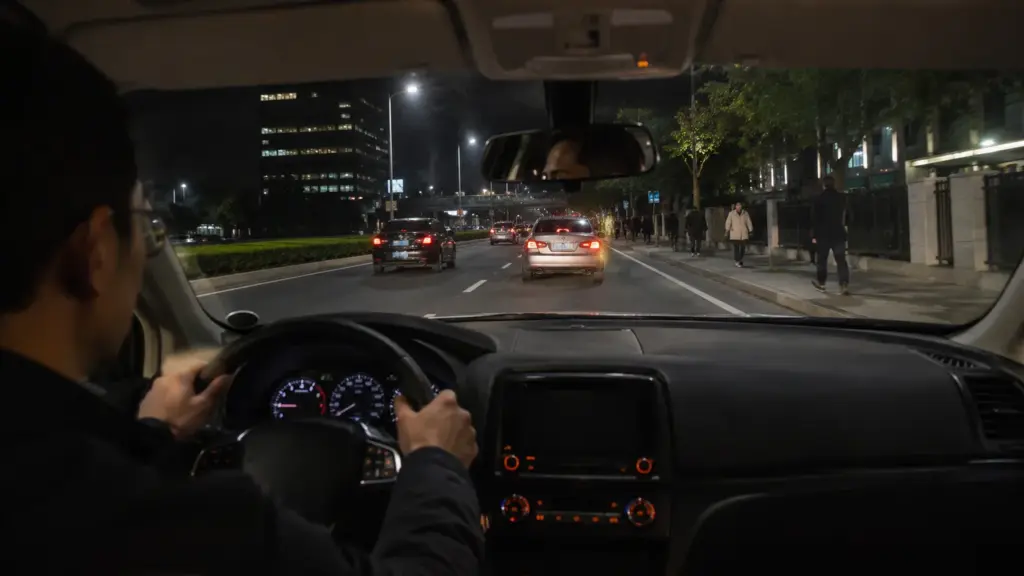
Treat fatigue as a separate decision
Consider how alert you will be at the end of the workday, not just how you felt when it began. A late finish, poor sleep, or a demanding shift may change whether driving is a sensible option. NHTSA drowsy driving warns that sleepiness affects driving and emphasizes getting adequate sleep.
Choose an alternative before you are too tired to organize it. That might mean a ride with someone else, transit that still operates at your departure time, or postponing travel when feasible. Check the alternative’s availability for the actual hour, including the final connection home.
Check the parking and walking portion
Confirm that you can enter the garage and return to the vehicle when you need to. A pedestrian lobby may close earlier than the vehicle exit. Save the operator’s instructions and note the floor, section, and nearest usable entrance after parking.
For recurring evening trips, compare two practical parking choices. Consider lighting, pedestrian routes, opening hours, and the distance you will walk with your belongings. Review the route again when your schedule or daylight changes. A good nighttime commute plan is one you can follow without having to solve every detail at the curb.