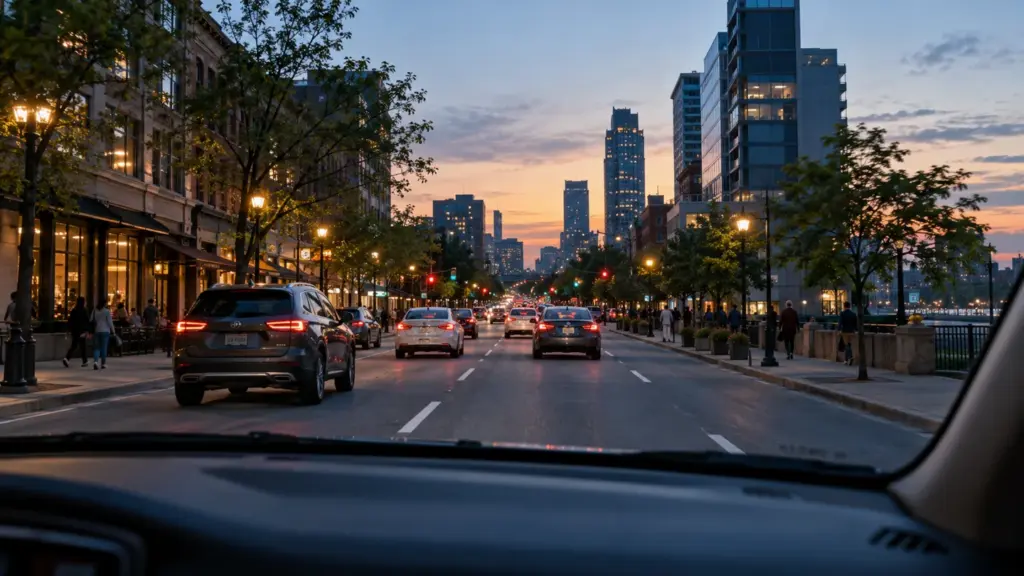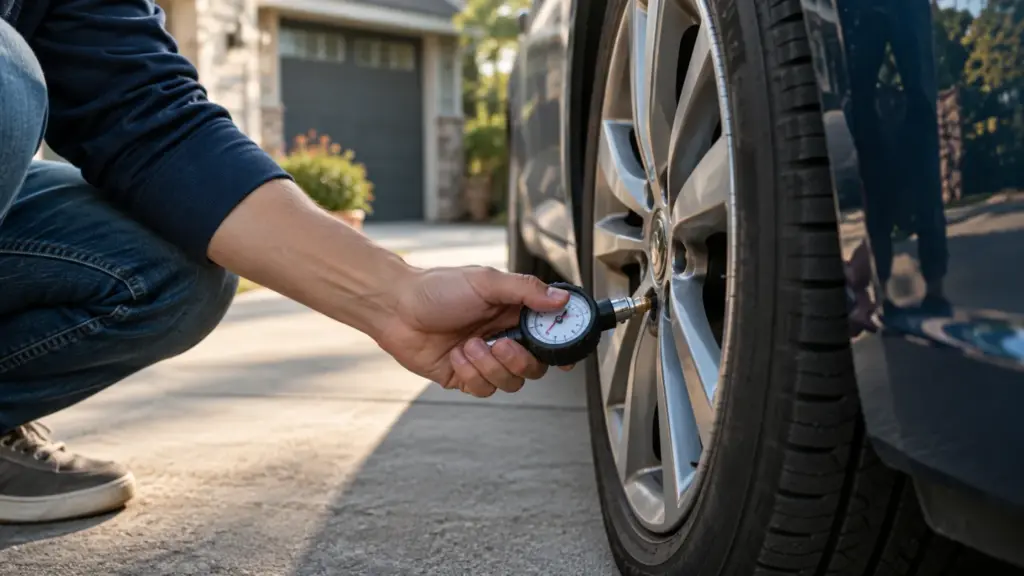
How to Handle Sun Glare on Your City Commute
Low autumn sun can change a familiar drive. Prepare your car, identify troublesome blocks, and leave yourself another option.
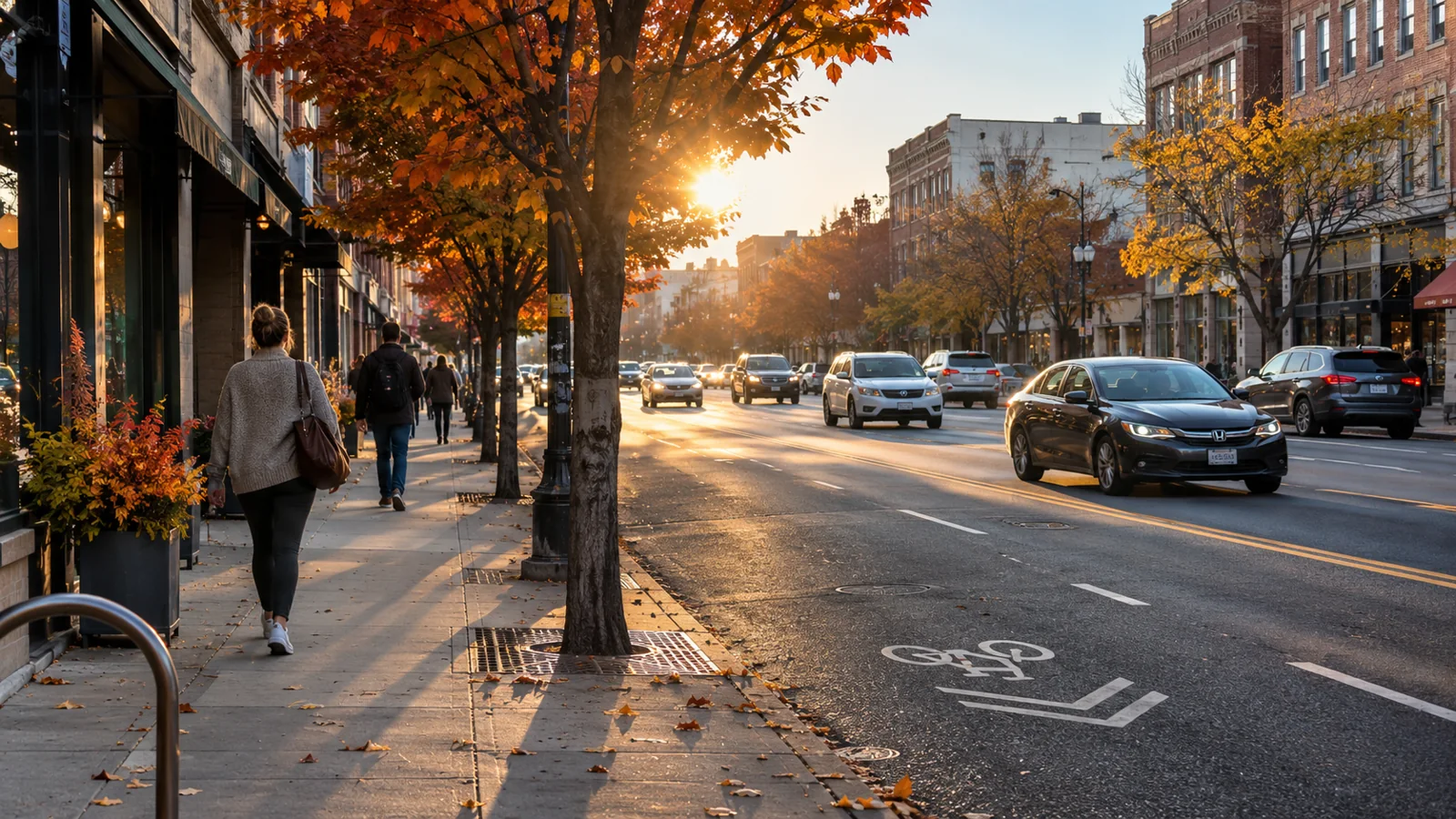
A route that feels straightforward in summer can become difficult in November. You turn toward a low sun, the windshield lights up, and the intersection ahead becomes harder to read. The problem may last only a few blocks, but those blocks can include a crosswalk, a bus stop, and a line of braking vehicles.
Handling sun glare on your commute starts before that turn. Identify where visibility deteriorates, prepare the glass you look through, and give yourself a way to change the trip when conditions demand it.
Find the part of the route that causes trouble
Think about direction as well as distance. Which stretch points toward the rising sun on your morning drive? Which turn exposes you to the setting sun on the way home? Buildings and hills can hide the sun and then reveal it suddenly, so an entire route does not need to face one direction to have a difficult section.
After parking, make a short note of the location and time. Record something useful, such as “westbound after the library, approaching the crossing,” instead of simply calling the whole commute bad. A specific location gives you something to compare when reviewing another route.
Our guide to planning a calmer city drive can help you consider the full journey, including the final turn into a garage or workplace driveway. Those last few minutes deserve the same attention as the main road.
Prepare the windshield before you leave
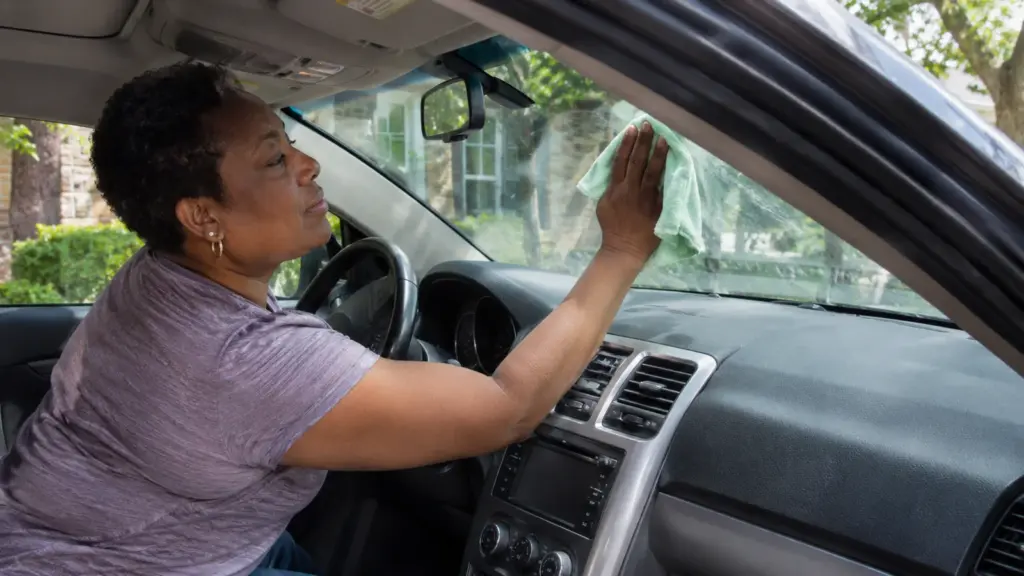
The California DMV’s safe-driving guidance recommends keeping both sides of the windshield clean, using a working sun visor, wearing polarized sunglasses for sun glare, and allowing adequate space around your vehicle. Its guidance is a useful starting point for preparing a car, wherever your commute takes you.
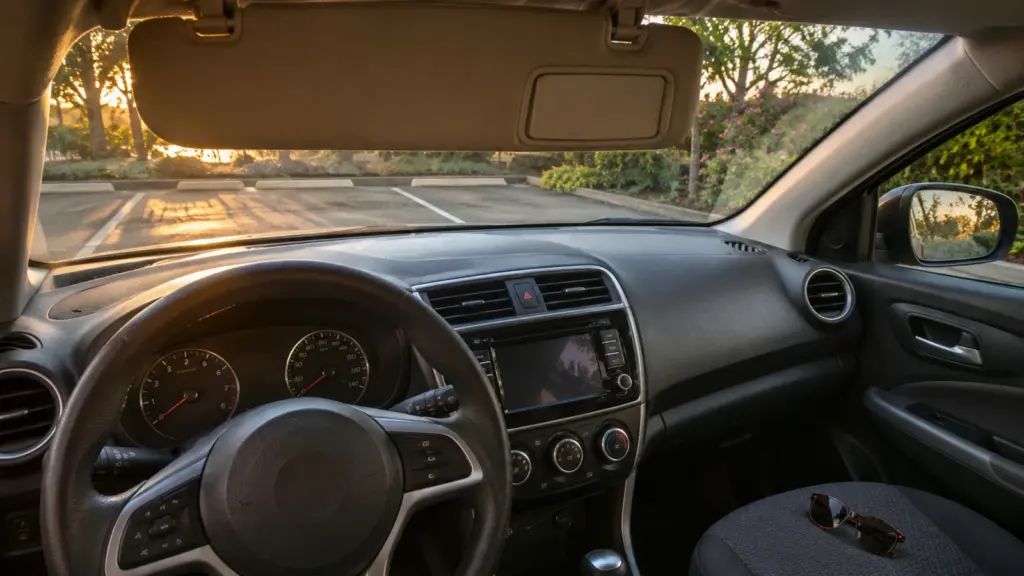
Do the cleaning while parked. Check the inside surface as well as the outside, and put the cleaning supplies away before driving. Keep the visor free of papers or accessories that stop it moving properly. Store your sunglasses where you can reach them before starting the trip, rather than searching for them at an intersection.
Treat a scratched or damaged windshield as a maintenance question for a qualified professional. A commute checklist cannot tell you whether a particular defect needs repair.
Leave room for what you cannot see clearly
Reduced visibility changes what is a suitable driving speed. NHTSA’s safe-driving advice emphasizes adjusting speed to conditions, including visibility. A posted limit does not establish that you can see far enough ahead at that speed.
Approach a familiar crossing expecting to look for people again. Yesterday’s empty crosswalk tells you nothing about today’s one. Avoid treating the movement of the vehicle ahead as proof that an intersection is clear, especially when its body blocks part of your view.
If glare prevents you from seeing the road adequately, look for a safe, lawful place to stop away from moving traffic when you can do so safely. Do not continue simply because the difficult section is usually short. Sudden stopping in a travel lane can introduce another hazard.
Compare one practical alternative
You do not need to redesign your entire week. Compare the troublesome block with one other route, or consider whether an available change in departure time avoids the worst conditions. An alternative with more turns or an unfamiliar merge may have its own drawbacks.
Make that comparison while stationary. Our routine for reducing driving distractions explains how to move navigation and other setup tasks out of the drive itself. Decide before leaving which route you intend to use.
Remember that November conditions can combine
Sun glare can arrive alongside wet pavement or early winter weather. The National Weather Service’s winter-driving guidance notes that low sun angles and glare from snow can make travel difficult. Check the forecast for the conditions on your route, rather than judging the whole trip from the view outside your door.
If rain is part of the forecast, combine this preparation with our rainy-day city-driving checklist. Avoid assuming that one accessory, a different pair of sunglasses, or a familiar route will solve every visibility problem.
A short check for tomorrow morning
- Identify the specific block where glare affects your view.
- Clean the windshield and set up the visor before departure.
- Choose a route and an available alternative while parked.
- Allow enough time to slow down or change plans.
- Review the troublesome section after arriving, never by taking notes while driving.
The useful measure is whether you can see and respond to the street ahead. A slightly different arrival time is easier to manage than a drive built around hoping the sun will move.