
A Tire Check Routine for Everyday Commuters
Learn what to check on commuter tires, where to find the recommended pressure, and which changes deserve attention before your next drive.
Updated October 30, 2026
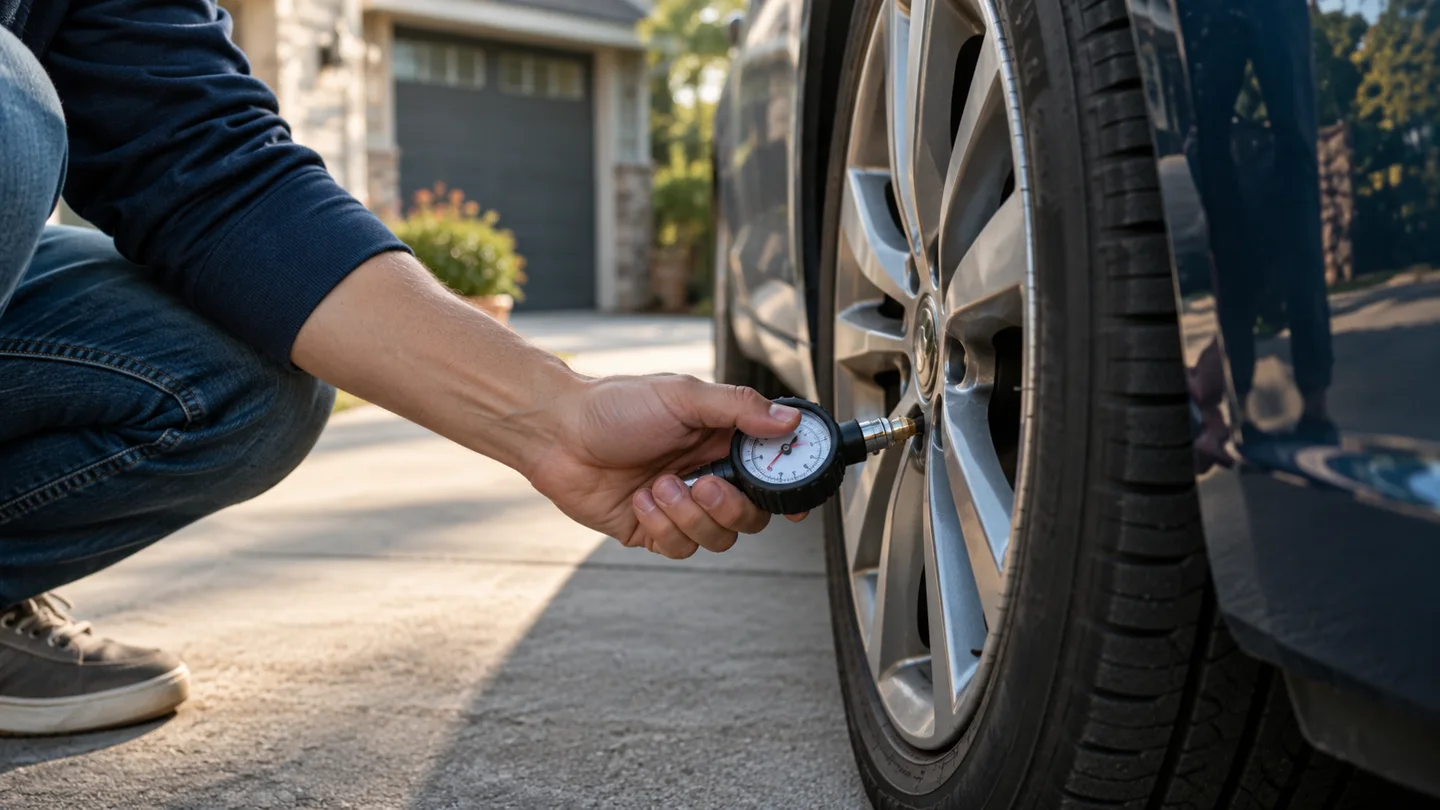
Short daily drives can make tire maintenance easy to postpone. The vehicle feels familiar, and nothing dramatic has happened. A regular check is still worthwhile because pressure, visible damage, and wear are easier to address when you notice them before a rushed departure.
This routine is a starting point for observation, not a substitute for the vehicle manual or a qualified inspection. If you find damage, a recurring pressure loss, or a change in how the vehicle handles, arrange appropriate professional help rather than assuming a quick adjustment will solve it.
Find the vehicle’s recommendation first
Locate the tire-information label, commonly on the driver’s door edge or door pillar, and read the owner’s manual. Use the vehicle manufacturer’s recommended pressure for the tires fitted to your vehicle. The number molded on a tire sidewall is not automatically the target pressure for your car.
NHTSA’s TireWise guidance recommends checking pressure when tires are cold and checking regularly, including the spare when applicable. Keep a suitable gauge with your vehicle supplies. Knowing where the recommended figures are makes the check easier to repeat without guessing or relying on a remembered number.
Look at the tire before adding air
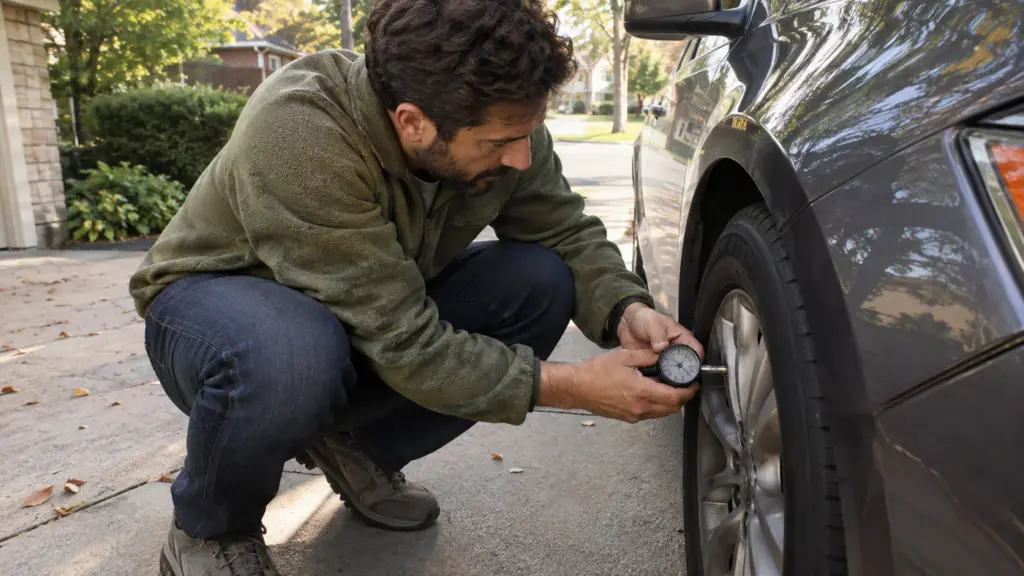
Walk around the vehicle where you can do so safely. Look for a tire that appears low, visible cuts or bulges, objects embedded in the tread, and uneven wear. Do not pull out an embedded object simply to see what happens. Note the affected wheel and seek advice about the next step.
Make the inspection part of a calm routine at home or in a suitable parking area. A busy fuel-station lane is not the place to conduct a prolonged examination. If a wheel is difficult to access, move the vehicle to a safer location before checking it.
Record changes instead of relying on memory
A brief note can show whether the same tire repeatedly loses pressure. Record the date, the wheel, and what you observed. A repeated pattern matters more than an isolated impression that a tire looked different one morning. Keep maintenance receipts with the vehicle’s other records.
If a warning light appears, consult the manual and respond to the warning rather than waiting for the next scheduled check. A monitoring system does not replace looking at the tires or understanding the vehicle’s maintenance requirements. Do not reset a warning merely to make it disappear without addressing its cause.
Include the equipment you would need later
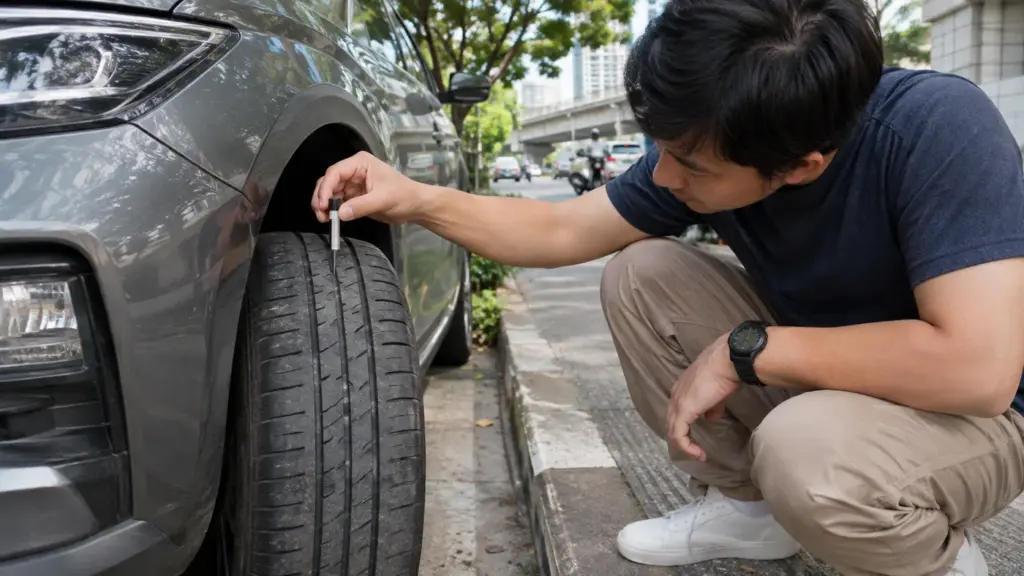
Check which roadside equipment the vehicle actually carries. Some cars have a spare, while others use a repair kit or a different arrangement. Read the instructions before you need them, including any restrictions. Check that the required tools are present and that consumable supplies are within their usable period.
NHTSA’s vehicle-preparation advice includes tires among the items to inspect before travel. Apply that preparation to routine commuting too, especially when your journey changes or you expect to drive farther than usual. A kit you have never opened is harder to understand on the roadside.
Know when the check should become a service visit
Do not use a calendar alone to decide whether a tire deserves attention. New vibration, persistent pressure loss, unusual wear, or visible damage is a reason to seek an assessment. Explain what changed and when you noticed it. Photos taken while safely parked can help you describe a visible concern.
- Keep the vehicle’s recommended pressure easy to find.
- Check in a safe place with an appropriate gauge.
- Include the spare or repair-kit arrangements in your review.
- Record recurring changes and ask a qualified professional about them.
The useful habit is consistency. A short, deliberate check is more helpful than occasional guesswork after a warning appears.