A Simple Lighting Routine for a City Bike Commute
Plan front and rear bicycle lighting, charging, mounting, and a return-trip check so changing daylight does not catch you unprepared.
Updated October 30, 2026
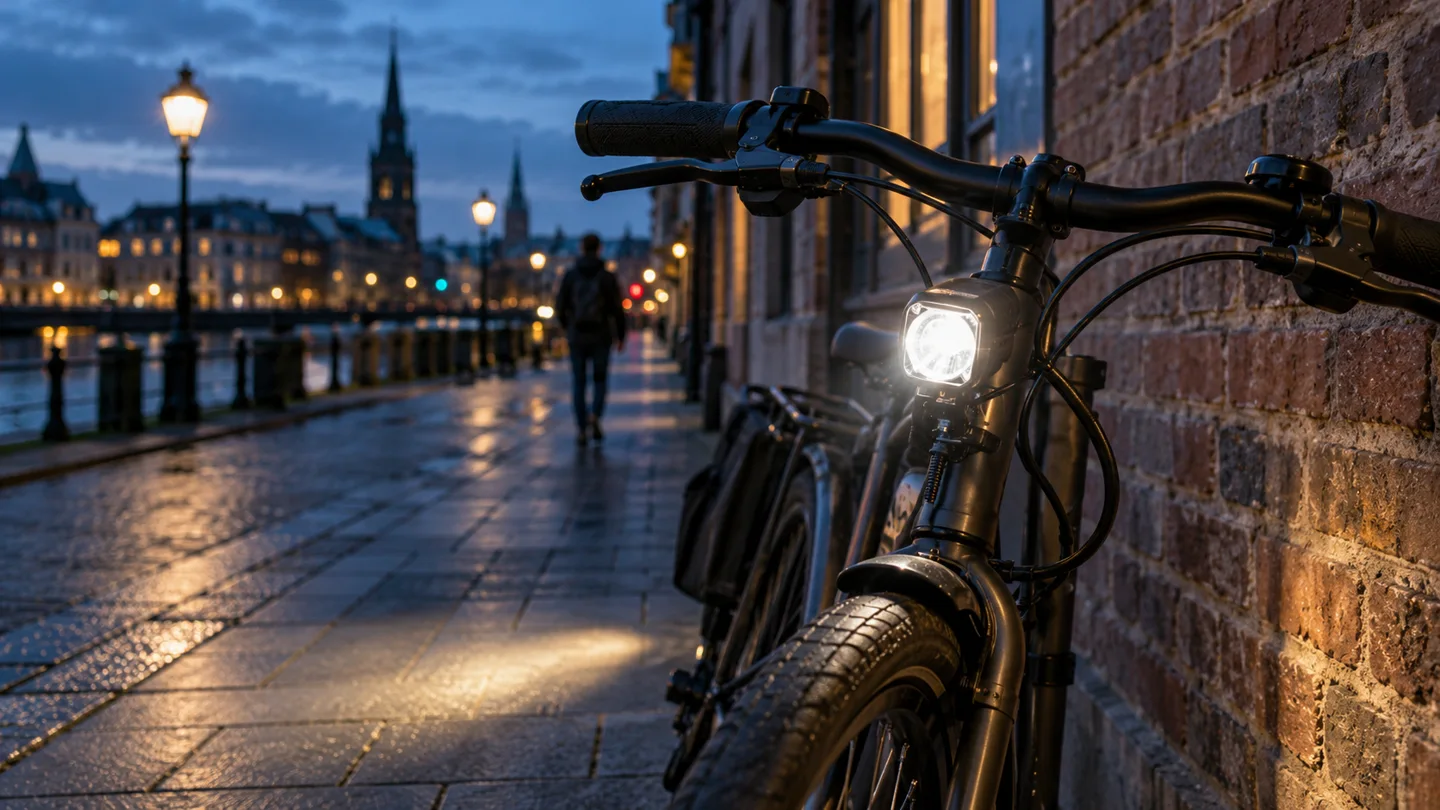
A morning ride in daylight can turn into an evening ride after sunset. Lights are therefore part of the commute plan, not equipment to remember only when the street looks dark. A small charging and checking routine is easier to maintain than an elaborate setup that is often left at home.
Match the setup to the whole journey
Check local requirements for bicycle lights and reflectors, then consider where you actually ride. An unlit path presents a different visibility problem from a well-lit commercial street. Equipment needs to help you see the route while making your presence more noticeable to others.
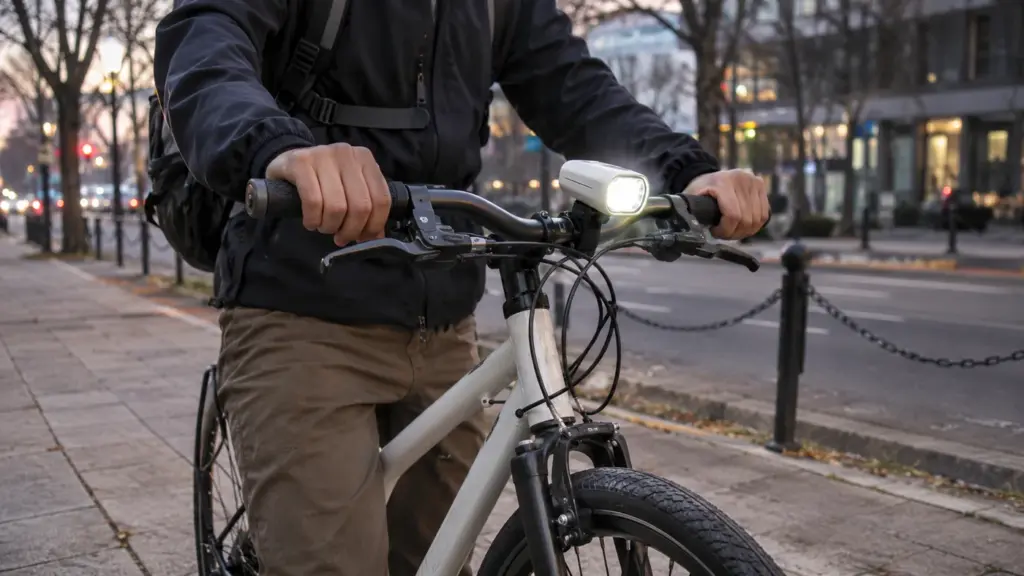
NHTSA’s bicycle safety guidance recommends a white front light and red rear light or reflector for riding at night. Local equipment rules may be more specific. A light’s presence alone does not establish that its position, brightness, or mode is appropriate for every setting.
Check the view from outside the saddle
Mount lights firmly and check them after fitting a bag or jacket. A rear light hidden behind a pannier or loose coat cannot do the job you intended. Position the front light to illuminate your route without directing an unnecessarily harsh beam into other people’s eyes.
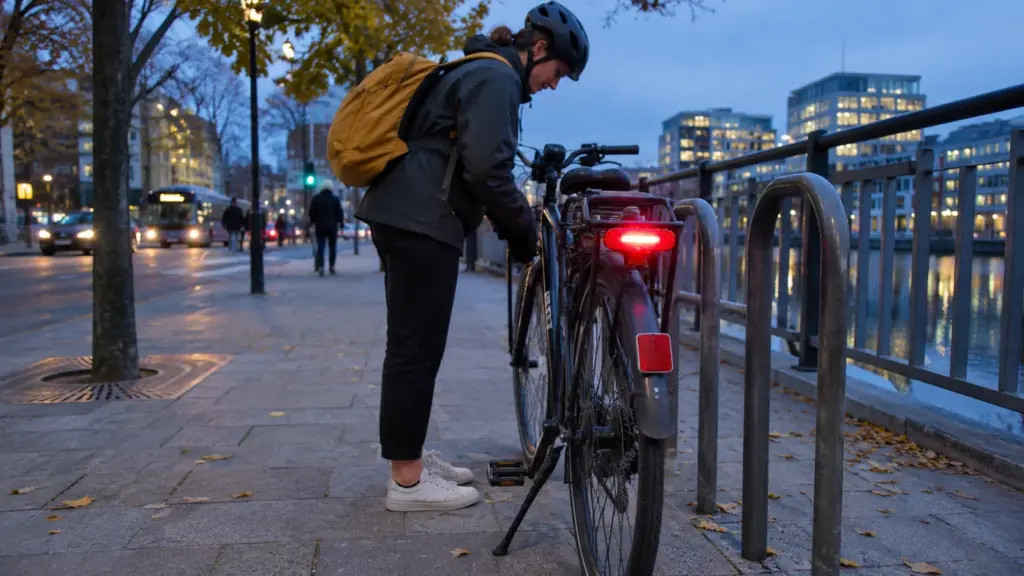
Stand several steps away from the bicycle and look at the setup from the front and rear. Check the mounts for movement and make sure cables, straps, and clips cannot touch a tire or brake. Use the manufacturer’s mounting instructions when the correct position is unclear.
Make charging part of a routine
Choose one place where rechargeable lights live when they need power. Check the battery before leaving, and allow for the entire return journey rather than just the outward leg. Battery indicators and advertised runtimes are planning aids; cold conditions, modes, and battery condition can change performance.
If your commute depends on lighting, consider a small charged backup that fits the bicycle properly. Carrying it has little value if its mount is missing or you have never checked that it works.
Recheck before the evening ride
At departure, confirm both lights are working and visible, then look at the route and conditions again. A lighting failure, heavy rain, or a route closure may call for another way home. Do not treat extra brightness as a substitute for a usable route and attentive riding.
When you arrive, turn removable lights off and take them with you. A short final check prevents an empty battery tomorrow and makes the next departure less complicated.