How to Plan Secure Bicycle Parking at Work
Choose a suitable bike rack, secure the frame and wheels, record identifying details, and plan storage for removable commuting equipment.
Updated October 30, 2026
Bicycle parking belongs in your route plan. A convenient ride can become frustrating if the only available rack is damaged, inaccessible, or unsuitable for your lock. Inspect the destination before making it your regular stopping place, and find a second option for busy days.
Inspect the place, not just the rack
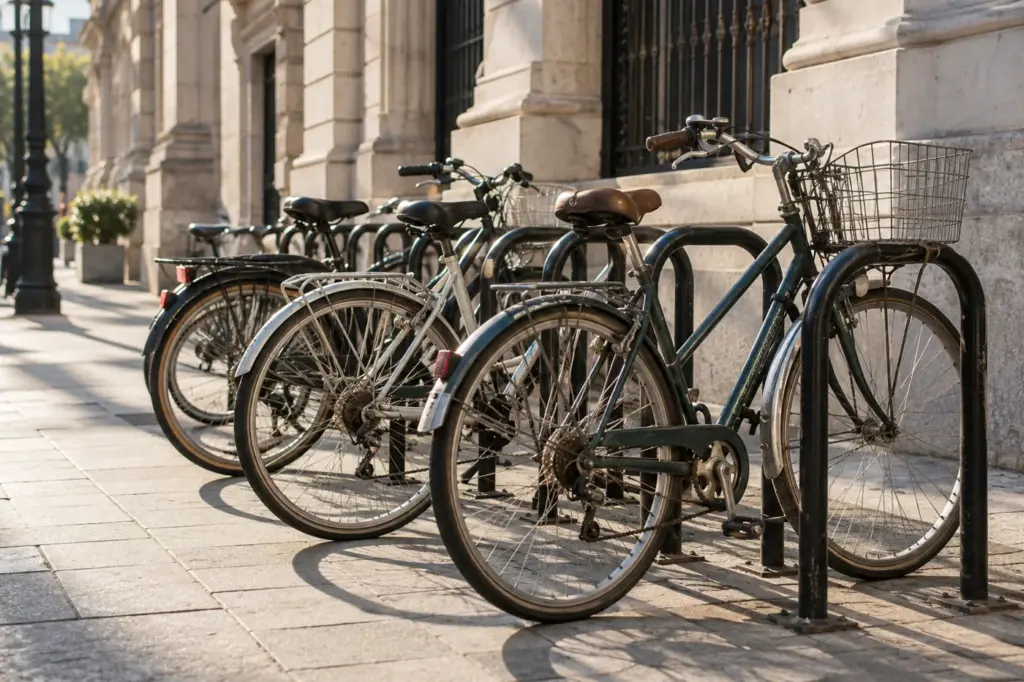
Choose a permitted parking area and check whether the rack is firmly fixed and can hold the bicycle without damaging it. Look at access hours, lighting, foot traffic, and any building rules. Indoor storage may require registration or a key, while a station locker may use a separate reservation system.
For example, BART’s bicycle parking information distinguishes its parking options and access arrangements. Use the equivalent official information for your destination rather than assuming every facility works the same way.
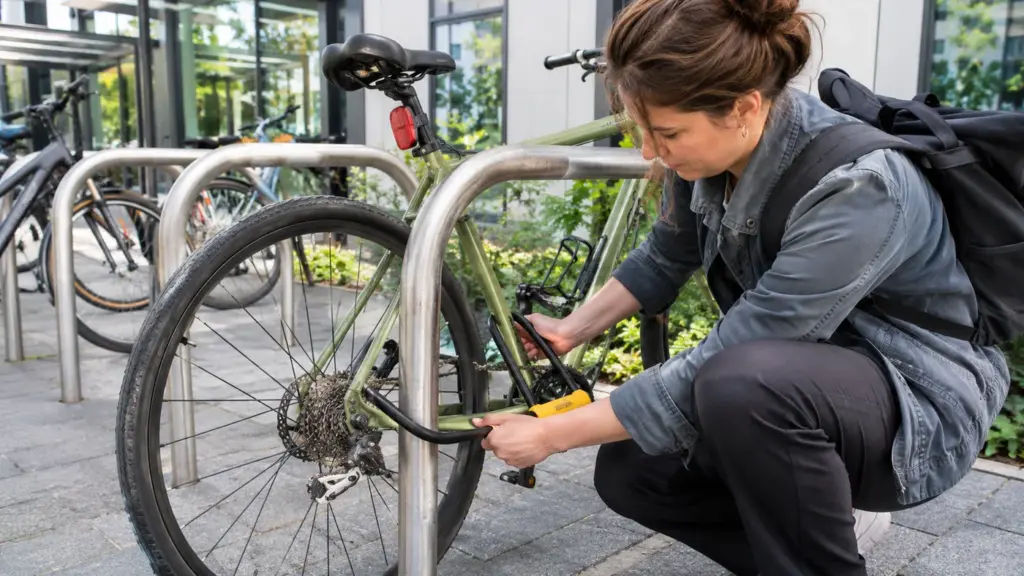
Secure the bicycle itself
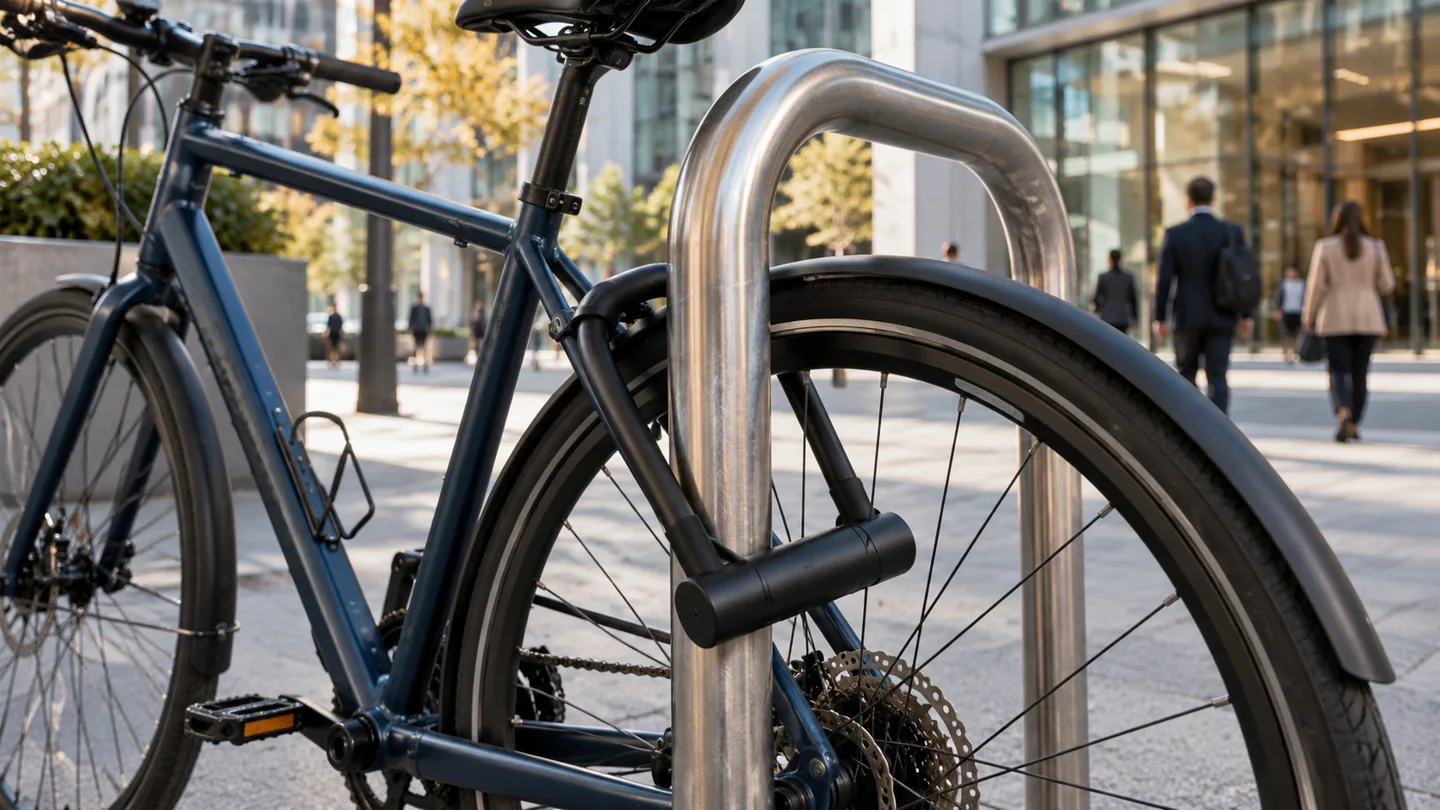
Use a suitable lock through the frame and a fixed object, with additional wheel security appropriate to your bicycle. Locking only a removable wheel leaves the rest of the bicycle vulnerable. Check that the object cannot simply be lifted out or disconnected.
San Francisco Police Department bicycle theft guidance recommends locking the frame and wheels and recording identifying information. No lock makes theft impossible; a sensible setup reduces easy opportunities and makes the parking decision more deliberate.
Remove what does not need to stay
Take removable lights, electronics, bags, and other easily detached items with you. Decide in advance how you will carry them into work so the routine does not become an awkward balancing act. If you use a quick-release saddle or wheels, consider their security as part of the complete arrangement.
Do not obstruct a walkway, accessible route, entrance, or another bicycle. Leave enough room for others to reach and unlock their own bikes. A secure attachment point is not automatically a permitted parking place.
Keep useful records privately
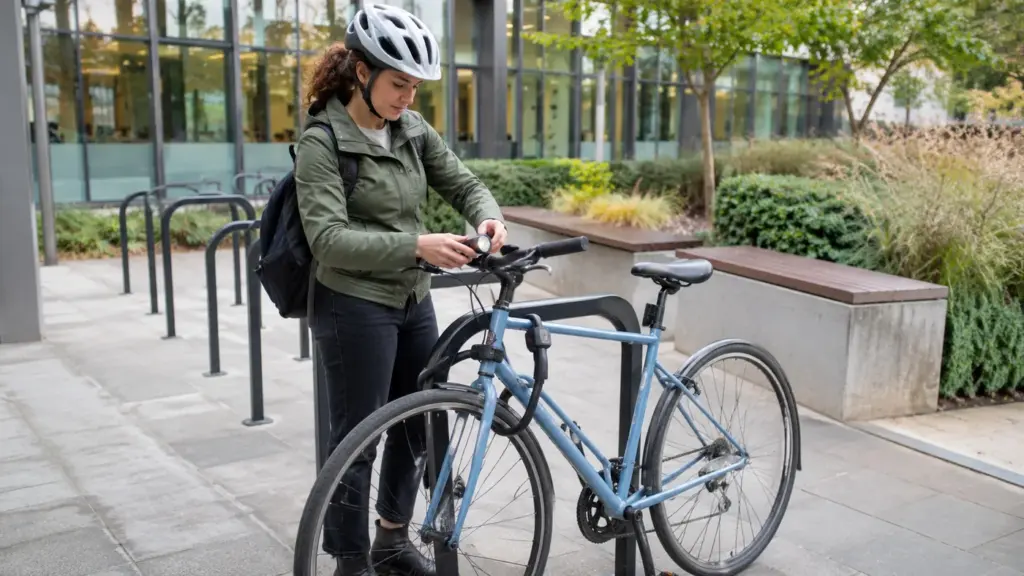
Save the bicycle’s serial number, purchase information, and clear photographs in a place you can access if the bike is missing. Record distinctive features and update the photographs after significant changes. Avoid publishing details that reveal where the bicycle is stored every day.
If you discover a missing bike, confirm the location and whether the property manager moved it, then follow the local reporting process. Good records help describe the bicycle accurately. Review the parking arrangement before replacing the bike or returning to the same location.