How to Plan a Calmer City Drive From Door to Door
Plan a city drive around realistic travel time, parking, difficult turns, and a backup route so the whole commute is easier to manage.
Updated October 30, 2026
A driving estimate ends when the map says you have arrived. Your commute ends when you have parked, gathered your things, and reached the right entrance. That difference explains why a supposedly short drive can still leave you rushing. A useful plan includes the whole journey and a few decisions made before you start the engine.
The aim is not to find a perfect route that never has traffic. It is to choose a route you understand, with realistic time for the parts a navigation app cannot predict. Start with one ordinary workday rather than trying to redesign your entire week.
Work backward from the entrance
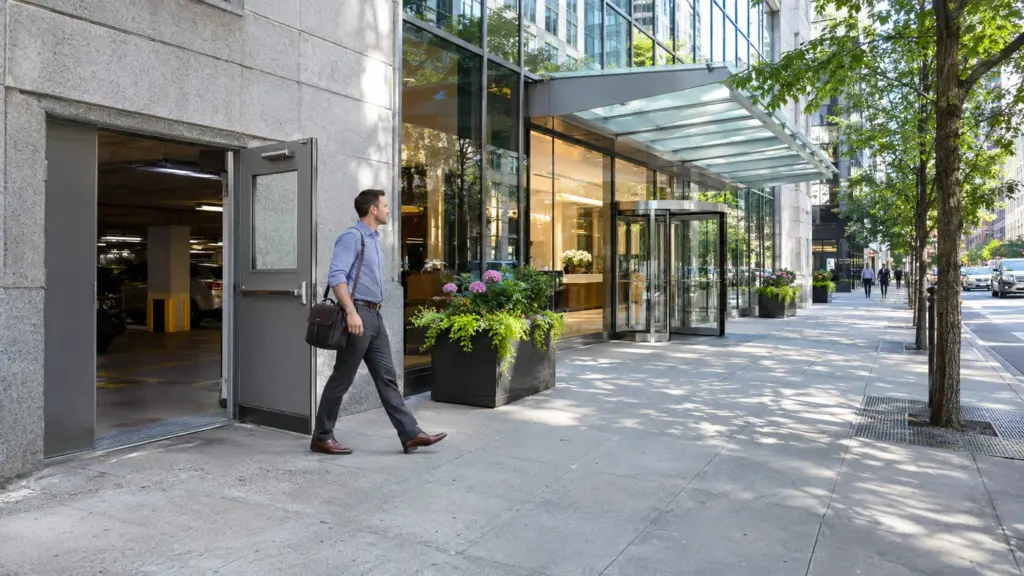
Identify the entrance you actually use, including which side of the building it faces. Then locate a suitable garage or legal parking area. Check its opening hours, pedestrian exit, and payment arrangements. An office address can lead to a loading entrance, while a garage entrance may be around the block. Save the parking entrance as the driving destination when that is more useful than the building address.
Allow separate time for parking and walking. If you usually spend several minutes finding a space, keep those minutes in the plan instead of hoping they will disappear tomorrow. Include any access check, elevator ride, or equipment you need to carry.
Compare routes by decisions as well as minutes
Look for complicated merges, difficult turns, and streets that change character near your destination. A route that is slightly longer can be easier to follow when it avoids a maneuver you find stressful. Compare it under similar conditions before choosing it as your regular route. Do not assume that a quieter-looking street is faster or appropriate for through traffic.
Choose one alternative that reaches the same parking destination. Note where you would need to decide between the routes. This gives you a useful option without encouraging constant route switching whenever the estimated arrival time moves by a minute.
Set up before moving
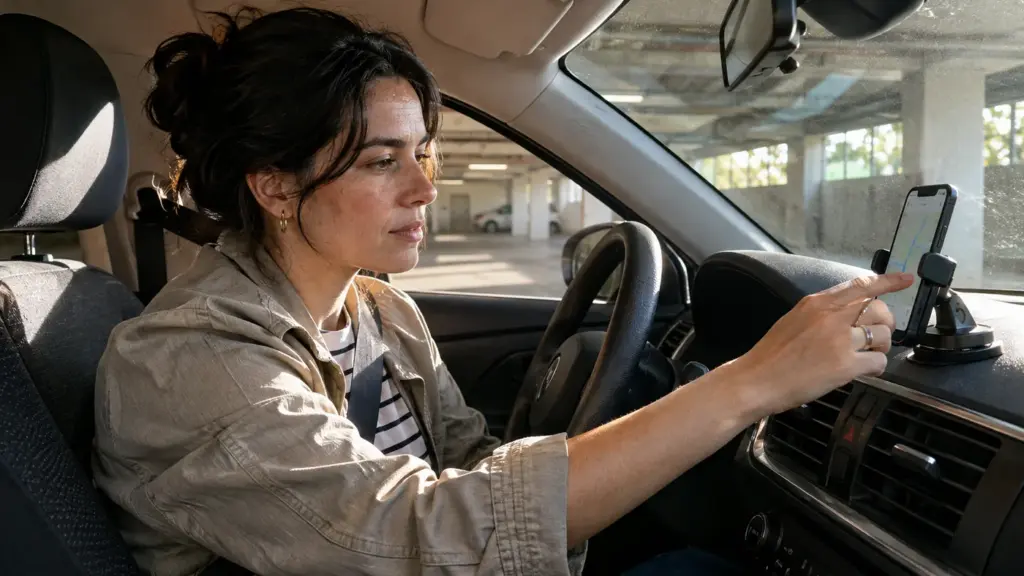
Enter the destination, arrange the phone where it will not obstruct your view, and set audio guidance before departure. Put loose items away and finish any messages first. NHTSA distracted driving explains that distraction includes adjusting navigation and entertainment controls, not only texting. If the route needs substantial revision, stop somewhere safe and permitted before making changes.
Tell anyone expecting you when you plan to arrive before you leave. That simple step can reduce the pressure to answer an arrival-time message while driving. An estimate is information for planning, not a deadline that justifies rushing.
Leave room for an ordinary delay
Track a few door-to-door journeys and distinguish the driving portion from parking and walking. Use a realistic range instead of the fastest trip you have ever made. The Department of Energy’s efficient-driving guidance also favors smoother driving over aggressive acceleration and braking. A small time buffer supports a more measured trip, although it cannot remove congestion.
For example, if your drive usually takes about half an hour but the garage and walk add another ten minutes, treat the commute as a forty-minute process before adding any personal buffer. These figures are an illustration, not a prediction for your route.
Review the part that keeps going wrong
After a week, identify one recurring problem. Perhaps the entrance is hard to reach, a meeting begins before the garage opens, or the return journey has a different bottleneck. Change that specific part first. Recheck the return route separately because one-way streets and afternoon conditions can make it different from the morning trip.
- Save the correct parking entrance and a second legal parking option.
- Prepare navigation and messages before departure.
- Include the walk and building access in the arrival estimate.
- Adjust the plan using several real journeys, not one unusually quick trip.