How to Combine Biking and Public Transit
Plan a bike-and-transit commute around operator rules, station access, bicycle parking, capacity, and a workable alternative for the return trip.
Updated October 30, 2026
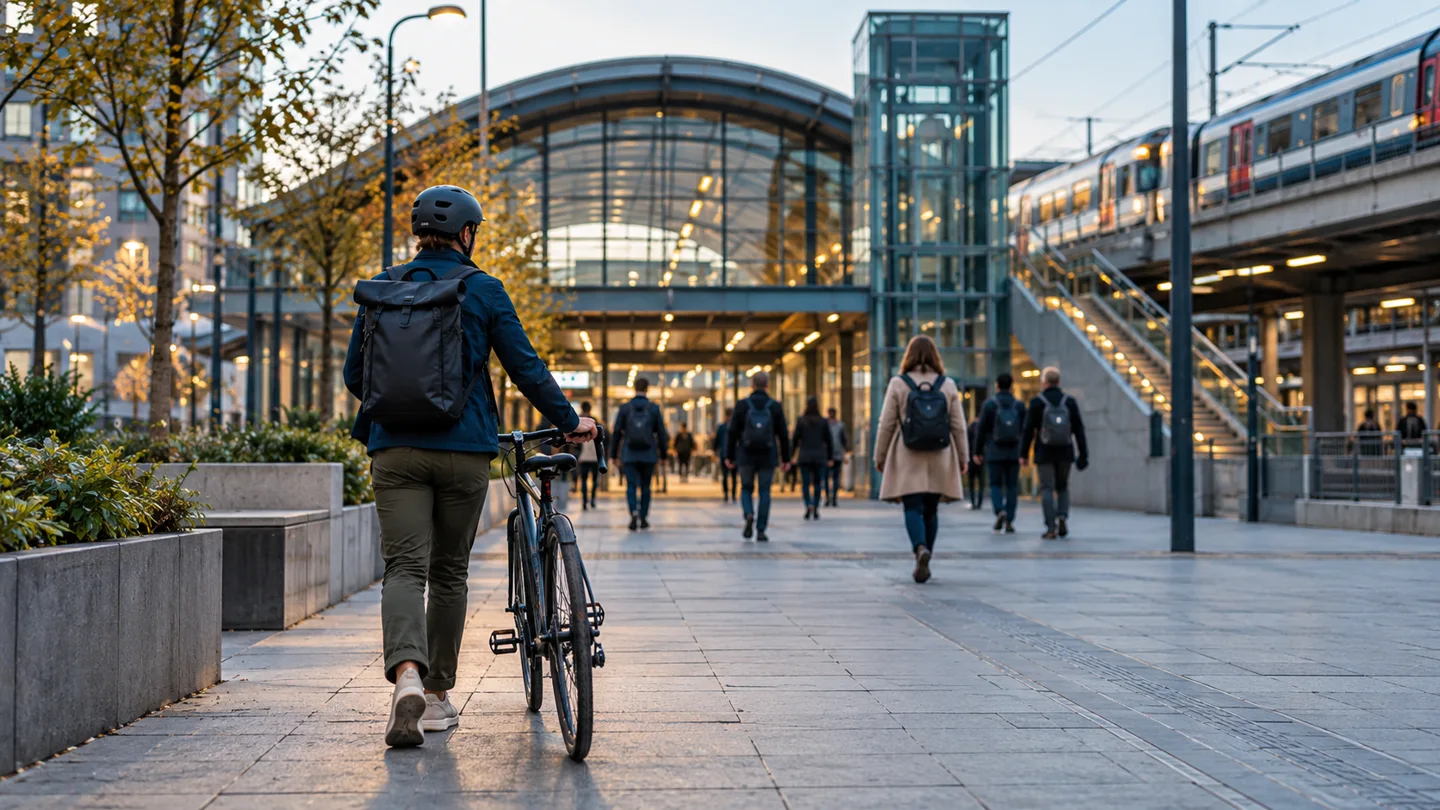
A bicycle can make the first or last part of a transit journey more practical. The connection needs planning, however: bringing a bike aboard and leaving it at the station are different arrangements. Choose the one that fits your route, schedule, and storage options.
Decide where the bicycle is needed
Map the journey in separate legs. If the bicycle only helps between home and the station, secure station parking may simplify the train ride. If the destination is far from transit, carrying the bike may make sense when the operator permits it.
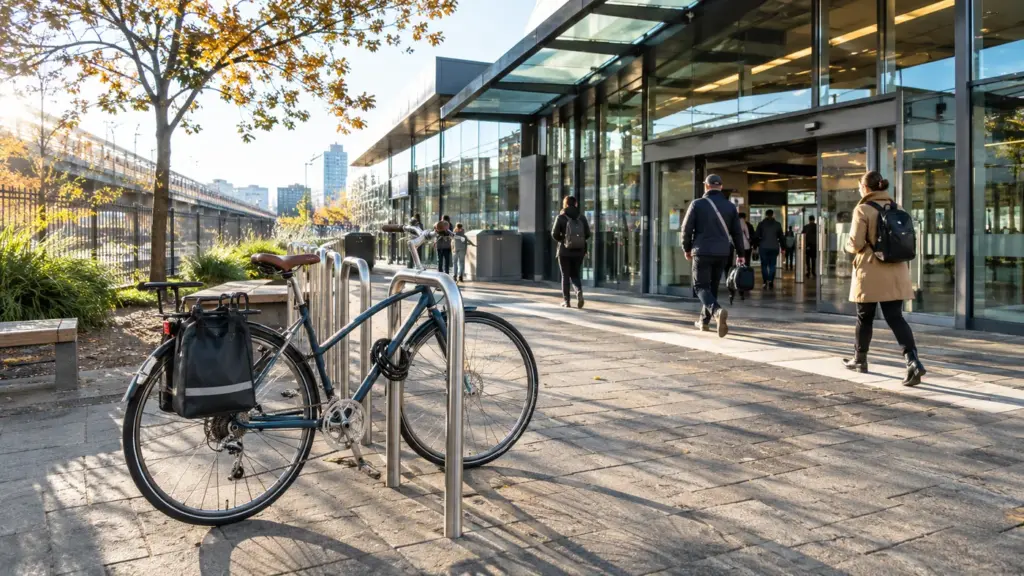
Check the actual station facilities. BART’s bicycle parking guide shows examples of racks, lockers, and other arrangements. Confirm access, availability, and any registration requirement for the facility you intend to use.
Read current onboard rules
Operators can restrict bicycles by vehicle, time, crowding, or location. BART’s current bicycle rules are a useful example of why details matter: the rules address cars, crowded conditions, and station circulation. Do not assume that an old summary remains accurate.
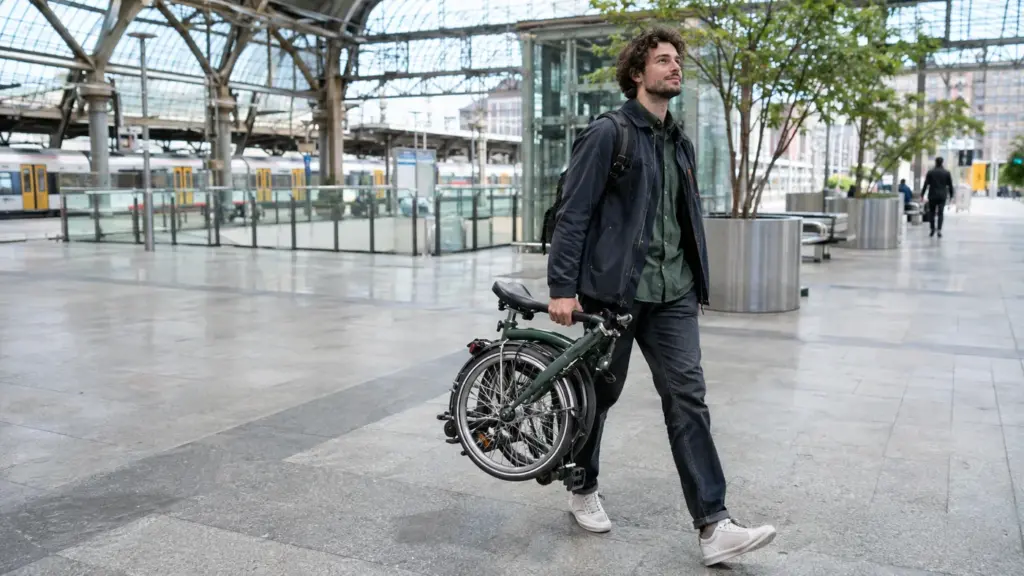
Check rules for your particular bicycle, especially if it is large, folding, or electrically assisted. Permission to bring a standard bicycle does not automatically answer every equipment question. Ask the operator when the published guidance is unclear.
Rehearse the transfer
Find the usable station entrance and the path to the platform. Allow time to walk the bicycle through crowded areas and to use an appropriate elevator or permitted route. Follow the operator’s instructions and give other passengers space.
Pack so you can control the bicycle and luggage without loose items swinging or falling. Practice the connection at a less pressured time if possible. A route that looks simple on a map may involve more doors, turns, or level changes than expected.
Keep a capacity backup
A service that permits bicycles may still be too crowded to board. Know whether you can wait for another vehicle, use secure parking, or take a different route. Check that your alternative remains available for the return journey.
After a few trips, record the connection time and the equipment you actually need. Mixed-mode commuting works best when the transfer is treated as part of the journey, with its own time and rules, rather than as an invisible gap between two fast segments.