How to Pack a Commuter Bag Around Your Actual Route
Pack a commuter bag around your transport mode, weather, work essentials, and transfer routine without carrying unnecessary weight every day.
Updated October 30, 2026
The right commuter bag carries what your route requires and keeps it easy to reach. Begin with an ordinary day rather than a shopping list of possible emergencies. Then add a small number of items that solve problems you have actually encountered.
Separate essentials from habits
Lay out what you carry and identify the items needed for work, payment, access, and the journey home. Remove expired tickets, duplicate cables, and things that stay in the bag without a purpose. If something can safely remain at work, consider leaving it there.
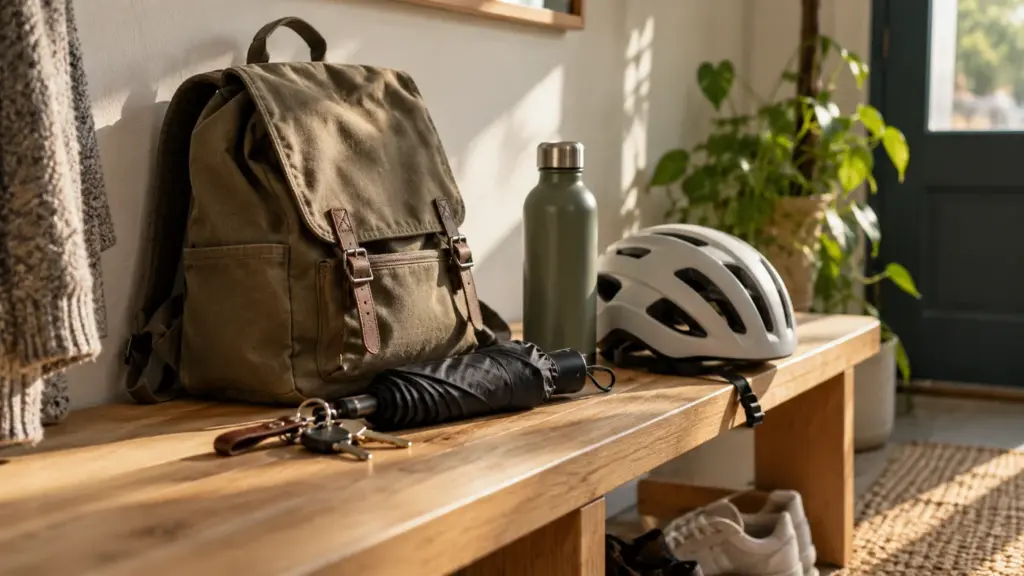
Keep keys, payment, and access cards in consistent places. You should not need to empty the bag at a gate or doorway. Protect identification and sensitive work material from casual view when the bag is open in public.
Pack for the mode you use
For walking, prioritize a comfortable fit and an unobstructed view. For cycling, secure the bag and all straps away from moving parts. On transit, make sure you can hold the bag without blocking doors or shared space; SFMTA’s conduct guidance offers one operator’s expectations for shared journeys.
If you change modes, rehearse how you handle the bag during the transfer. A setup that is comfortable on a bicycle may become awkward on a crowded train. The transfer is part of the equipment decision.
Protect against the likely weather
Check the forecast and pack a suitable layer or reliable waterproof liner when needed. NOAA’s outdoor weather guidance is a useful planning resource, but the items you carry should reflect the conditions and your available shelter.
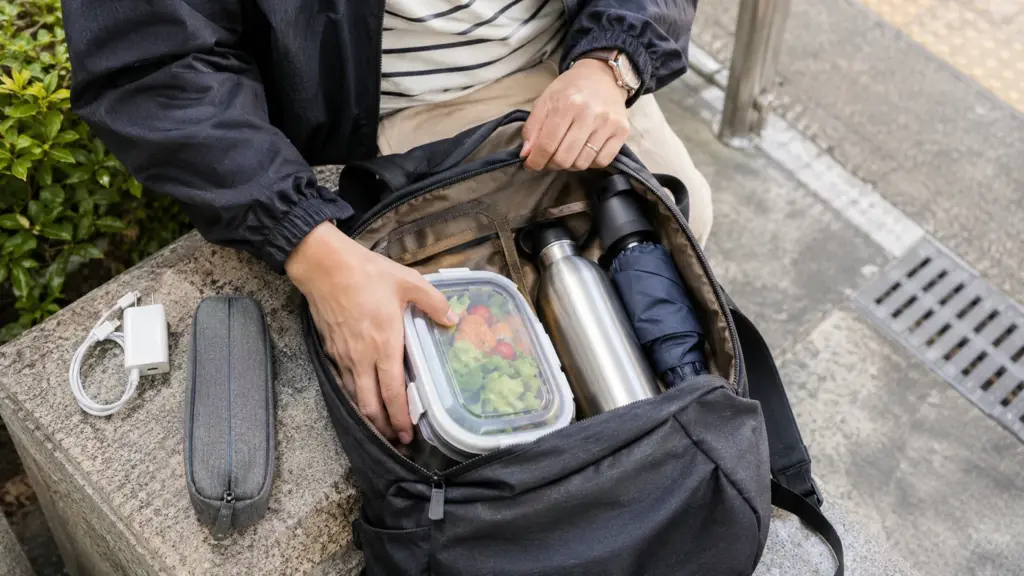
Keep electronics and documents inside the protected part of the bag. Store a wet umbrella or layer so it does not soak everything else or drip onto a shared seat. Do not assume a water-resistant outer fabric protects every opening and seam.
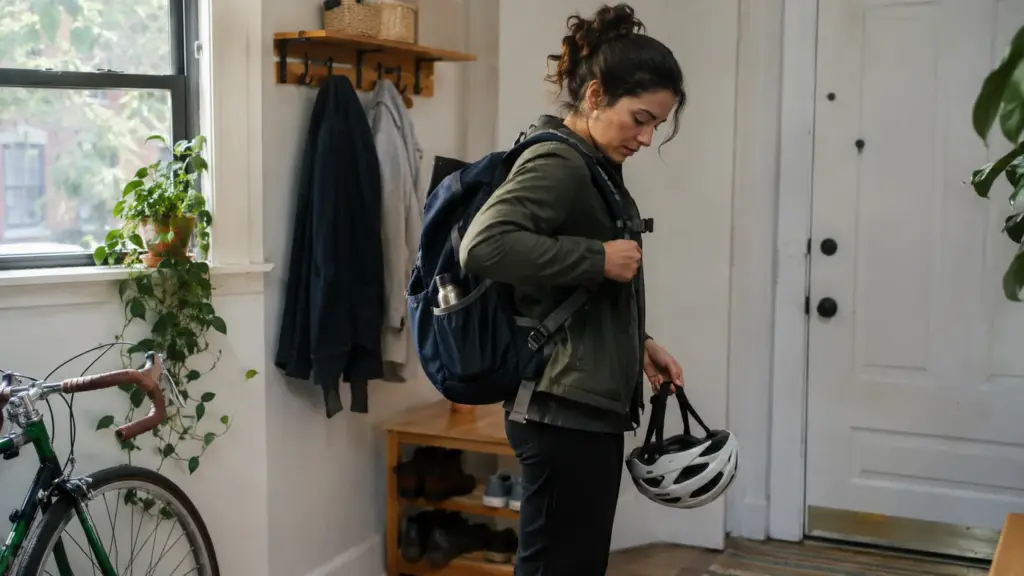
Reset at the end of the day
Remove food containers, recharge equipment, and replace anything you used. Check tomorrow’s schedule before returning items to the bag. A meeting in another building or a later departure may change what is useful.
Review the weight occasionally. The best system is one you can manage comfortably while keeping your hands and attention available for the journey. A smaller, repeatable set of essentials usually serves that purpose better than carrying every possible solution every day.