How to Plan a Park-and-Ride Commute
Check station parking rules, payment, space availability, walking access, and return service before trying a park-and-ride commute.
Updated October 30, 2026

Park-and-ride combines two journeys and the connection between them. It can reduce the amount of city driving you do, but the station parking arrangement needs to fit your schedule. Check the lot as carefully as the train or bus service before relying on the combination.
Identify the correct parking area
Confirm which lots serve the station and whether they use daily payment, reservations, permits, or another arrangement. Some spaces may be reserved or governed by different rules within the same facility. Read the operator’s current information before arriving.
For example, BART’s parking overview and parking FAQ describe its system’s arrangements. Use those only for BART locations and check the corresponding operator for another station.
Connect the parking plan to the service
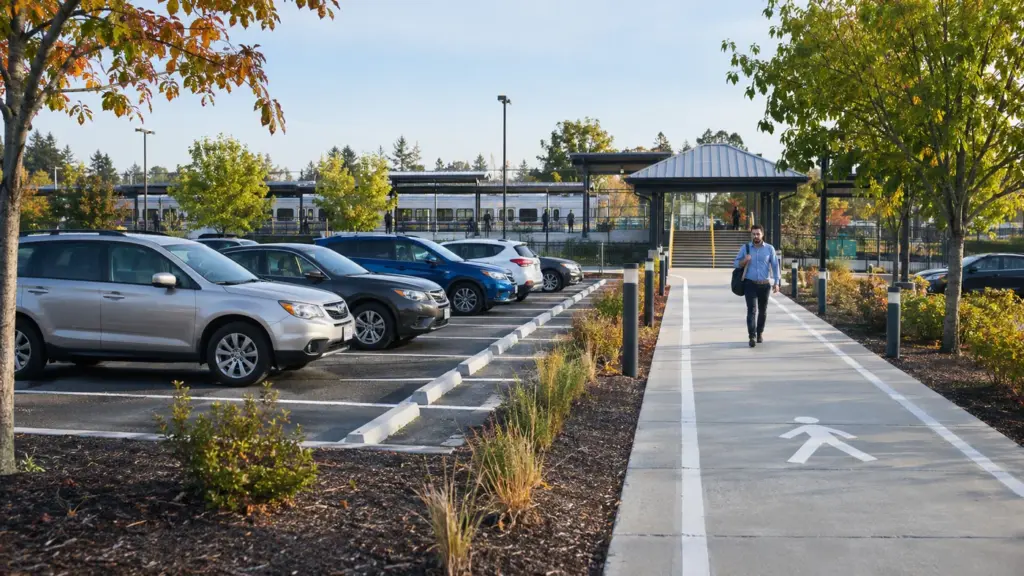
Allow time to enter the lot, find a permitted space, pay, and walk to the correct platform or stop. Check whether the pedestrian route includes stairs, elevators, or crossings. A parking map and a station map may be needed to understand the whole connection.
Have another plan if the lot is full. That could be a different station with usable parking or a direct bus from closer to home. Do not treat surrounding residential streets as an automatic overflow option without checking their rules.
Add both sides of the cost
Combine parking, fares, fuel or charging, and any additional transfer. Compare that total with the alternatives you would realistically use. A cheap parking space does not necessarily create a cheap journey if the remaining trip needs several paid connections.
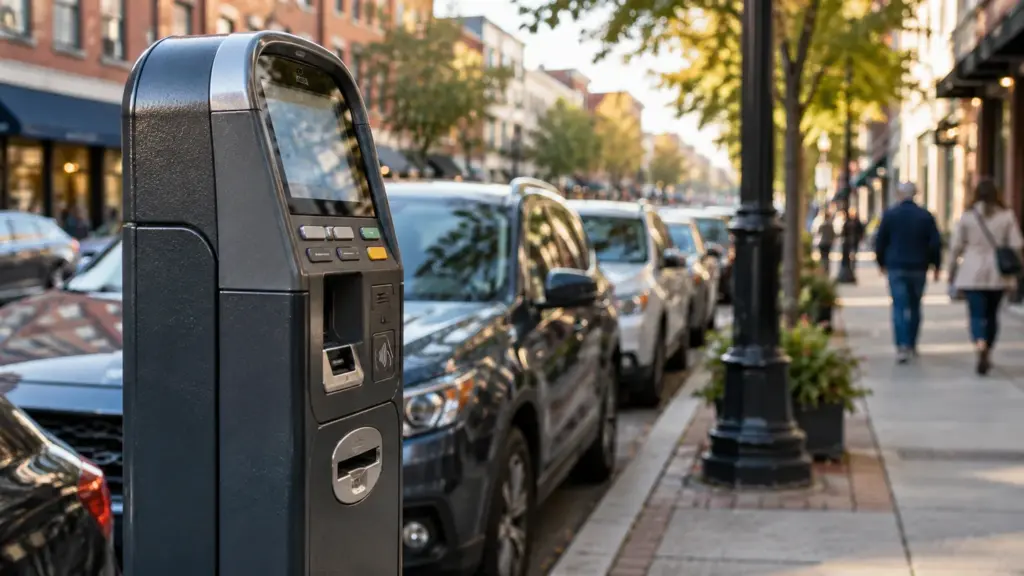
Check any payment process that links parking to transit use. Enter vehicle and location details carefully, and save the confirmation. Set up an account before the first commute if the operator requires one.
Plan the return to the car
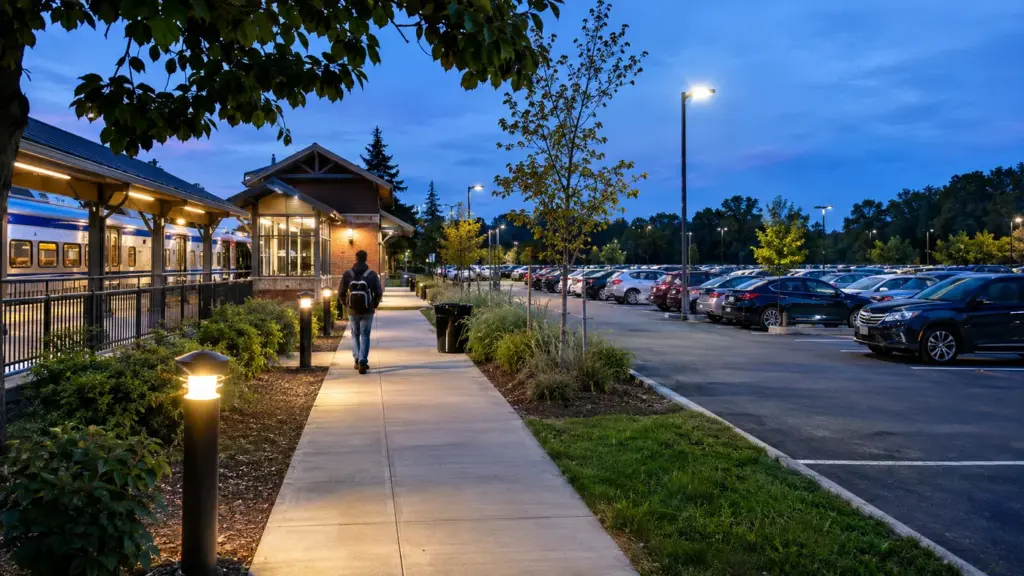
Check evening service and how you enter the parking area after returning. Note the lot, level, or section so you do not have to search at the end of the day. Keep belongings out of view and follow the facility’s security guidance.
After a trial week, compare actual door-to-door time with your original estimate. Include the variability in finding a space and making the connection. A workable park-and-ride commute is a reliable combination of parts, not simply a shorter drive.